
8 How Leaders Can Inspire Creativity in an Organization
Chapter Overview
This chapter aims to provide an overview and offer recommendations of the role leaders play to inspire creativity in an organization. The chapter also elaborates a new perspective about how leaders may be inspired by creativity and provides understanding of the major terms from the field. The chapter ends with an activity to apply the concept to your own creative intelligence (CiQ) development and perhaps extend that to your team.
Learning Objectives
After reading this chapter the reader should be able to:
- Explain the role leaders play in creative and innovative organizations;
- Discuss how to inspire creativity in organizations, using the revised perspective of Corporate Leadership Inspired by Creativity;
- Explain a new perspective of leadership inspired by creativity to inspire reignite teams’ creative orientation and output and build a culture of innovation and intrapreneurship. this text with learning objectives.
Keywords:
Leadership, Creativity, Compassion, Meaning, Security, What it is, What it isn’t
Introduction
Leaders can (and probably should) play a pivotal role in inspiring creativity in an organization. The deficiency of leadership being able to inspire creativity in an organization is a stubborn challenge of the 21st century. Many approaches to leadership as well as creative leadership to inspire creativity were introduced in the past century. Some have prevailed while most have faded. The 21st century has brought unique challenges marked by constant unpredicted change and disruption—making it difficult to respond to today’s challenges with yesterday’s solutions. Thus, it is time to look at how leaders can inspire creativity as well as consider perspectives on leadership that is inspired by creativity, and as critical second focus, inspire creativity.
Furthermore, this chapter also encourages you to view leadership under a new light by introducing a new perspective on leadership inspired by creativity, not to be confused with creative leadership because these two concepts are quite different.
Where are we in Time and Space?
Let us quickly take a stock of where we are in time, space, and state. The COVID-19 pandemic has already infected over 134 million people world-wide and is responsible for claiming lives of over 2.9 million individuals [1]. In response, nations impose restrictions, make pleas for citizens to observe social distancing, and mandated different versions of lockdown – ranging from mild seclusion and distancing to severe isolation, to flatten the curve and impede the spread.
Social life as we knew it does not exist in this COVID-pandemic. Businesses such as restaurants, pubs, festivals, conferences, and public spaces are only partially open to paying consumers. Globally, commerce and travel has diminished and become nothing but a frail shadow of what it was a year ago. The global chains of supply and means to fulfill demands have paused in some cases, sped up in others – but overall have changed dramatically. Coronavirus’ impact on individual life as well as the global ecosystem has been enduring and remain highly influential in short- and medium term. Overcoming this pandemic and restoring whatever remains of normalcy or creating an entirely new normal is what the leaders of today are tasked with.
Role of a Leader in Inspiring Creativity
A leader is the essential catalyst for inspiring creativity within his or her organization. Employees look up to their leader – seeking a role-model to inspire improved behavioral and motivational outcomes and to emulate her or him in different contexts. The importance of a leader who seeks to inspire creativity within the organization is vital in the 21st century context. This is because the coming times are not going to bring with them problems of the 18th or the 19th century. The coming times are going to bring diverse and novel problems creating unique sticky issues, which along with hyper-competition and a VUCA world under strain of multiple global challenges on the ethical, technological, economic, and social front.
Under such circumstances, leaders who seek to inspire creativity become paramount. In the next section we cover some of the most pressing challenges leaders of today have to overcome. And, of equal importance, while it is important for a leader to inspire creativity, it is equally crucial to have a leader who seeks inspiration from creativity to inspire a culture of creativity, innovation and invention within the organization.
Leaders during Crisis
Leaders are key agents of change, during and after times of crises such as the current pandemic, earthquakes, wars and other socially impactful event, in conceptualizing, co-creating, and establishing a new normal. We know from past literature that a major challenge leaders have to face is to adapt to the newly evolved conditions presented by a crisis and create new ways to lead that are apt in resolving the crisis [2] [3] [4]. Drafting a new vision through revised leadership is a challenge for leaders [3] [5] who are absorbed by the day-to-day managerial firefighting. Leaders provide a new direction for organizations. They identify new opportunities and steer their organization to explore and examine those opportunities to ensure profitability and sustainability of the organization. Leaders are the first agents of change to visualize and execute the idea of a new normal, which requires them to be inspired by creativity as well as inspirers of creativity in the organization.
How can Leaders Inspire Creativity in an Organization?
Creativity although greatly desired is not easy to inspire at an individual level. And making creativity a part of an existing corporate culture is, as expected, difficult. This section presents recommendations for leaders to inspire creativity within their organizations.
Creative Corporate Restructuring
Corporate restructuring is a common corporate exercise. However, in a large majority of cases restructuring merely becomes synonymous to shuffling, swapping, or just reassigning within the existing structure. Newer additions to existing structures with the coming to light of various corporate blind spots are not what I recommend here as restructuring. While the change does stimulate a different outcome. More often than not the difference in the outcome is marginal.
To promote corporate creativity, a new structure based on the ‘what it is’ and the ‘what is isn’t’ is recommended. For employees to think creatively one of the early structural changes could be to encourage a rotating structural setup. For example, in a ten person team, for a pre-decided tenure, half of the team takes the responsibility of managing the ‘what it is’ aspects of the business. Whereas the other half is exclusively engaged in the ‘what it isn’t’ business activities. Upon the completion of the tenure, they switch. This is an example of a ‘what it is’ and ‘what it isn’t’ rotating structure. As a leader and using your CIQ you can come up with different varieties of new structures that are not just a mere extension or a modification of the existing one.
Incentivizing Creativity
A ‘carrot’, corporate slang for an incentive, is always a great way to promote a certain type of behavior. However, there is a catch. In most corporates, it is common practice to incentivize successful initiatives and initiators. While helpful such forms of incentivizing are not effective at cultivating corporate creativity. For cultivating corporate creativity, incentive should be tied to the effort of engaging in the process of being creative instead of it being tied with only the successful outcomes. Such fundamental changes to the incentive initiatives are necessary for cultivating and inspiring corporate creativity.
Immunity
Just as a newborn requires protection until it grows and strengthens, similarly a new culture also requires immunity and protection. Like a newborn, a new culture is vulnerable and susceptible to dangers. Fear of failing is not the only deterrent to inspiring corporate creativity. The anxiety and the inability to bear consequences post failing are equally powerful deterrents to inspiring corporate creativity. Thus, for a new culture to flourish, immunity from penalties and protection from repercussions has to be inculcated strongly. Immunity from failure is empowering and encouraging. For corporate creativity to be cultivated forgiveness should be a given, when in initial stages.
Mission
To inspire corporate creativity, its inclusion in the mission of the corporation is an important step. A mission for any organization is like the marching drum that synergizes all its movement. When inspiring corporate creativity is also a mission for a corporation then it also becomes the underlying motivator encouraging employees to be creative. Creativity’s inclusion in the mission also enables the human resources departments to indulge in more activities that increase corporate creativity.
Creativity Champions
This recommendation is important. Leaders of corporations should create and invest in a new role within the corporation referred to as Creativity Champions. These individuals’ primary responsibility is to champion the cause of creativity within an organization. They work on deputation for a set time in every department. In whichever department they are deputed, they try to work with the members of the department to explore and experiment ways in which corporate creativity can be enhanced.
Towards a New Perspective
What type of corporate leader is apt to lead human enterprises in the post-Coronavirus 21st Century? The need for a novel perspective of corporate leader stems from the fact that the Coronavirus pandemic has revealed gaps as well as complacency in current corporate leadership. The biggest gap that was observed was about the lack of leaders to inspire creativity among employees. These gaps were observed in large organizations, corporations, as well as governments. The inefficiency of inspiring creativity and the subsequent loss of life, opportunities, access and dignity are requisites for a revised perspective of leadership. The approach to leadership where a leader is not required to have a certain trait as long as s/he has the position and the ability to identify a desirable trait in someone and enhance it in others is problematic. Previous work on creativity and leadership by Klemm [6] has suggested that creativity is an important skill for a leader, but it is not necessary for a leader to be creative as long as s/he can understand creativity and identify it and provides an atmosphere where creativity can flourish.
This is the point of departure that this chapter takes from traditional literature. This chapters argues that it is equally important for the leader to be creative and seek inspiration from creativity to inspire others to be creative. This point of departure becomes the rationale for the need to think further about a revised perspective on leadership apt for the 21st century and introduce it. A revised perspective builds an alternative frames of reference to reconfigure and revise a phenomenon (leadership here) that has already been identified [7]. It does so by using interrelations [8] and combining previously unconnected principles of creativity and compassion from the fields of psychology to the study of leadership.
Creativity in this new perspective is neither optional nor on the fringes. It is in the core along with compassion. The best thing about both is that they are not static variables or traits. They are dynamic and can be influenced through training. Also, as Sir Ken Robinson puts it, we are all born creative but slowly and surely through years and years of confirmatory training in a skewed education system, creativity is weeded out from an individual [9]. Here we just hope that aspiring leaders reconnect with their inner creativity before and to inspire creativity in others .
Understanding Major Elements
Before we proceed to see and understand the revised perspective on leadership, it is important to be on the same page in regards with how the chapter understands and interprets major elements of the revised perspective.
Creativity
Based on all that you have read so far in this book, how do you define creativity?
As you very well know by now, there are numerous definitions and explanations of creativity proposed by leading scholars and practitioners such as Sir Ken Robinson, Bob Sternberg, Edward De Bono, Mark Runco, Michael Mumford, Gerard Puccio, Giovanni Corrazza, Ron Beghetto, James Kaufman and more. You may find some of their definitions in the previous chapters. Despite the prevalence of definitions from these renowned practitioners and scholars, this chapter adopts the definition of creativity found in the FAQ section of the MacArthur Genius Grant webpage [10]. Let us first look at the definition and then I will explain my rationale for choosing this over many others.
“Creativity comprises the drive and ability to make something new or to connect the seemingly unconnected in significant ways so as to enrich our understanding
of ourselves, our communities, the world, and the universe that we inhabit.”
In my humble opinion, this is one of the best definitions/explanations of creativity. The rationale behind choosing MacAurthur Foudation’s definition is because it defines creativity in a holistic manner. The MacArthur Foundation’s definition not only beautifully captures but also comprehensively elaborates the plural nature of creativity. This explanation further eliminates any bias (product or art) in the explanation of creativity by elaborating that creativity is not restricted by any one given style or form. It is able to be and present itself in many forms such as
- “asking questions that open onto fields of enquiry as yet unexplored;
- developing innovative solutions to perplexing problems;
- inventing novel methods, tools, or art forms;
- fusing ideas from different disciplines into wholly new constructions;
- producing works that broaden horizons of the imagination.”
All the above take a broad view of creativity and this is especially important for this chapter and the revised perspective because the challenge of 21st century leadership requires leaders to think at the broadest levels along with innovating and inventing new ways of solving seemingly interminable problems to advance their profits, along with the people and the planet.
Leadership
Once again, despite the availability of numerous definitions of leadership in the literature, for this revised perspective, I will not choose from any existing ones. Instead, I will create one.
A definition of leadership that I feel is apt is, “Leadership is the cumulative of all the actions of a leader.” However, when discussing this with my scholarly colleagues and practitioner friends, their feedback was that this definition is incomplete because it does not hint at the aspect of to what effect.
They had a valid point and in response to their feedback, I did my own research of what should be the perceived end points that remain true to the essence at the individual, societal, and global level. After much research I finally decided to adopt Colin Beavan’s constructs meaning and security, and include in my new definition of leadership. Before I introduce my new definition, it is important to explain meaning and security. Colin Beavan has done an excellent job of centering his work in the book How to be Alive around the two central tenets of meaning and security [11]. He has also defined them exceptionally well and I will present his explanations of the two below.
Colin Bevan defines security as “Security is what you need to be alive, safe, healthy, and comfortable, and comes from what you get from the world through your relationships”.
He defines meaning as “Meaning is the buzz you get from being alive, and includes self-expression, the ability to change things, adventure, and service, all of which come from what you give to the world through your relationships”.
Both security and meaning are anchored, somehow, in your relationships and interactions with others and the world and this is very important for a leader aspiring to keep balance with the tripe bottom-line. Based on these and my previous definition of leadership, the definition of leadership that I have created and endorse for the new approach to corporate leadership as well as leadership in general is as follows.
‘Leadership is the cumulative of intentional and unintentional actions to lead one’s followers to meaning and security.’
The ‘What it is’
The concept of ‘what it is’ has been adopted from the book Creative Aerobics: Fueling Imagination in the 21st Century written by Linda George and Arpan Yagnik in 2017 [12]. The ‘What it is’ here should be understood as what exists currently. Everything from existing achievements, qualifications, state of being, as well as internal and external avenues of growth is included in what it is. Internal avenues of growth refer to improvement in lifestyle, and mindset that aid in inching closer towards growth. Whereas external opportunities can come in the form of a strategic partnership or collaboration that could lead to growth. Growth is a positive increase in the meaning and security of an individual or a group.
The ‘What it isn’t’
The concept of ‘what it isn’t’ has also been adopted from the book Creative Aerobics: Fueling Imagination in the 21st Century. ‘What it isn’t’ is to be understood as the area of mainly unknown opportunities and possibilities. It can also be construed as what does not exist yet but must be created to enhance meaning and security. ‘what is isn’t cannot be usually accessed with our existing mental systems of processing and synthesizing. Learning and applying creative strategies allows one to access these unknown realms of opportunities and possibilities.
Revised Perspective on Leadership Inspired by Creativity
With the six major elements (creativity, leadership, meaning, security, what it is, and what it isn’t) defined and outlined, it is time to introduce the revised perspective of corporate leadership inspired by creativity. The revised perspective of leadership has three main aspects to it. In this section, I present them to you first the new model or the new perspective of leadership with the help of a Venn Diagram, and later provide explanation.
The ‘What It Is’ and the ‘What It Isn’t’
The concepts of “what it is” and “what it isn’t” have been adopted from the book Creative Aerobics: Fueling Imagination in the 21st Century [12]. A creative individual who draws inspiration from creativity over the time builds the ability to strike a balance between the two areas. This balance is critical. S/he has a good combination of strengths and abilities to work in the ‘what it is’ sphere and a good combination of strength and abilities to discover the opportunities in the ‘what it isn’t’ that exist but are not currently accessible. An individual with a balance of both also has the courage to persuade his own self and others to act on them to inch closer towards meaning and security individually and socially.
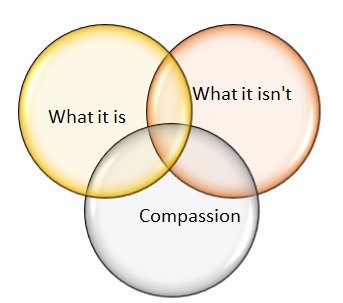
Figure 1: Revised Perspective of Leadership Inspired by Creativity
There are two important things that need to be clear before proceeding further. The mastery of ‘what it is’ is indicative of a latent leaderly attribute. However, an individual who focuses solely on ‘what it is’ does not qualify to be a leader according to the revised perspective. S/he is better suited for the title and role of a manager. Similarly, the mastery of ‘what it isn’t’ also implies a latent leaderly attribute. But once again it is not the only ingredient that qualifies one to be a leader according to the revised perspective. An individual focusing solely on the “what it isn’t” is better suited for the title and role of an explorer or just a curious soul.
A leader inspired by creativity sees more similarities than differences. To be able to see similarities is good for leaders in two ways. It not only makes them be inspired by creativity because, as noted earlier in this chapter, creativity is the ability to see connections between the seemingly unconnected but also being able to see similarities requires discipline and practice. And when a leaders thinks of others, and thinks of others more like his own, compassion comes into action.
Leader vs. Manager
A balanced dose of ‘what it is’ and ‘what it isn’t’ is important for a leader in any field because the role of a leader is not just to manage the smooth functioning of current day-to-day affairs. To manage is a management function. A manager is tasked or mandated to manage resources and solves problems to ensure the smooth functioning. A leader, on the other hand, leads her/is group of followers in a direction of meaning and security. A leader is able to identify an optimal direction by constantly foraying and exploring yet unknown opportunities and determining possibilities by using creative incitement and stimuli. While we know that there is a crucial distinction between a leader and a manager but what the distinction is alluded above but is clarified in detail in the next paragraph.
To understand the distinction between a leader and a manager, here’s an example of the banking sector. Every branch of a bank has a manager who is respectfully referred to as the branch manager. The branch manager is responsible for the smooth day-to-day operations of that branch to meet the goals of the bank. A branch manager does not get to sit in meetings with members of finance ministry and Federal Bank/Reserve Bank Governor to determine the rate of interest or the statutory liquidity ratio. The chairman of a bank, as its leader, does that. A chairman’s role is to lead the bank, its customers and the banking sector in the direction of economic and regulatory security by exploring opportunities and discerning possibilities.
Compassion
The third and final characteristic essential for leadership in the post-Coronavirus 21st Century is Compassion. An immediate question that arises after reading compassion is why not passion? To be passionate and to have a passion is great. We are increasingly becoming a passion-driven society. But the increasing prominence and unnecessary weightage given to passion in our society, I feel, is misplaced. To use it as an indicator for electing or selecting a leader is counter-productive because passion is an individualistic construct and is becoming more and more of a selfish construct. Hence, passionate individuals, being self-centered, should not come to anybody as a surprise. If you hire a passionate individual don’t be surprised if he finds a better position and leaves you looking for the next passionate individual to fulfill his passion.
If you elect a leader who is passionate don’t be surprised if he uses his position only to fulfill his passion and does not really do much for the people because he is being true to his goal and character. Passion, for those who don’t know, is an old French usage meaning to suffer (alone). Passion is more so used with I, me and my. In the current times and the times to come indicators of success will drastically change. If you succeed alone and everyone else around you is not succeeding then you will also be considered a failure. Collective upliftment is the only form of success that will be branded as real success.
Alternatively, compassion means, “to suffer with”. Compassion, unlike passion, is not an individualistic notion. Compassion takes into account everyone. Compassion includes everyone. Compassion values everyone. Compassion is uniting. Compassion is inclusive. Compassion does not discriminate. Compassion is all-encompassing. Therefore, when you select an employee, select or elect a leader my advice is to go for the compassionate ones as opposed to the passionate ones. In today’s world where a large majority of people (based on a list of successful friends of Colin Beavan) are constantly stressed, anxious, unhappy, and, frankly empty, a little more compassion would be good. Especially, in leaders, who are responsible for steering us to a future where we would be none of the above and instead enjoy meaning and security.
Hence, compassion is the third element in my revised perspective of leadership inspired by creativity. The force of compassion is creativity rich. I use the word creativity here with regards to one’s ability to imagine the countless ways of keeping everyone together and taking them along. Depending on your field of experience it is possible or not to empathize with others. However, with rich imagination, empathizing with others becomes relatively easier. Without compassion, other unrelated and distant human beings are pretty much like undiscovered species of insects.
Differences and similarities are like the ‘what it is’ and ‘what it isn’t’. ‘what it is’ is finite in comparison to the set of what it isn’t. Similarities are the ‘what could be’, which are also parts of the realm of opportunities. Hence through education, parenting, and training we tend to restrict our thinking progressively. In other words, we become more and more set in our ways, with a diminished ability to break away from the established logical structures. The neural structures by the time we grow up have transformed into a network of interstate highways, fast reliable, and without stop signals. Hence, such strong existing neural networks don’t allow much room for integration and creativity.
For most of us, it is rather easy to see differences than see similarities. We see so many differences that our actions and behaviors are mal-influenced by it. At an individual level, this is less dangerous because the scope of influence is limited. But when an individual is a leader this can be dangerous. A leader who sees only differences can become divisive and damaging and set his enterprise and along with it humanity on a regressive path. Also, because of such mal-influence we are still struggling with issues of race, religion, caste, creed, color, and class. If we had been more of a similarities-driven society instead of a differences-driven society, we might not have had such trivial aspects of human existence transform into intractable problems of humanity.
Leaders, therefore, have an important job to do, especially in the post-coronavirus 21st century, which is to lead corporations in the direction of similarities and compassion. They could be leaders of big and powerful corporation or a small enterprise. Or they could also be leaders of their own conscience and actions. Without such clarity, the people and planet aspect of the triple bottom-line will never be able to come to the forefront, which is increasingly important for businesses. Corporate leaders inspired by creativity have the opportunity and the possibility of transforming our societies by leading them away from differences and instead more towards meaning and security by positioning their enterprises to aid in making this possible.
But such progress is impossible to accomplish only with creativity. A leader who seeks inspiration from creativity should also possess a healthy capacity for compassion. An individual who is able to make the connections between what is and what could be for the benefit of everyone is the right leader, who despite his or her position can lead people to meaning and security. This perspective on the new era’s corporate leadership is unique and novel from the dominant perspectives presented in the creative leadership perspectives because this approach to leadership does not have the goal of making followers more creative or ensuring that they do whatever is needed to reach a creative outcome predetermined by the leader. Meaning and security are the two goals. The existence of businesses and enterprises are all to ultimately provide an individual these two.
Why is this Revised Perspective Valuable?
The revised perspective of leadership is valuable because it suggests that leadership, despite being studied heavily, can be perceived differently, and that we have not yet studied it in its entirety. Moreover, leadership matters now even more than before due to the devastating effects of Coronavirus pandemic. This revised perspective of leadership inspired by creativity, is crucial not just for understanding, electing/selecting, and evaluating leadership in the post-coronavirus 21st century but also important as a guideline for an MBA student, a corporate professional, and an entrepreneur about how to think, act and be as a Leader.
This revised perspective of leadership is timely and extremely relevant because the times and nature of challenges have changed drastically but unfortunately the training of leaders has not changed accordingly. In my estimate, eighty percent of the curriculum and structure of training in leadership schools remains unchanged for the past two decades. This revised perspective will hopefully make the understanding of leadership current and updated. This contribution of revised perspective of leadership is immensely valuable because it provides a fresh framework to consider and apply to identify an individual with leaderly potential.
A Look into the Future
The revised perspective of leadership inspired by creativity is not to be considered a theory but a phenomenon, and therefore it only needs to be observed and experimented. The implication of introducing you to leadership in a new light is that it invites you to experiment this in your own lives, decisions, and roles. The purpose is to engage existing leaders in an in-depth dialogue whether this phenomenon should be closely observed or not because it introduces a relationship between creativity and compassion to inspire and enhance leadership just like a theory would. However, unlike a theory a phenomenon may not be established or contradicted [13] [14]. This revised perspective will open new opportunities for future researchers to establish contexts and constraints for the interrelationship of creativity and compassion.
One context that is up for immediate examination of the revised perspective and its assumed relevance to the post-coronavirus 21st century leadership requirements in corporations. New leadership models might be introduced by amalgamating concepts from this perspective and existing models, which may lead to theory advancement. Researchers can also further examine the revised perspective at different levels of leadership.
This perspective can benefit the corporate community by allowing them to look at leadership differently. With the coronavirus pandemic, businesses have to be led differently than before and the revised perspective presented here provides preliminary guidance on how to do so differently. Every major corporation will now have to concern itself with the prosperity of the planet and the people in addition to the prosperity of its own shareholders. This need will require more compassion more imagination on the part of the leader along with enhanced creativity. The revised perspective presented here identifies the skill gap and the mindset gap that needs to be filled in order for the leaders of the post-coronavirus 21st century to succeed in providing value to its stakeholder along with caring for the planet and its people.
With this revised perspectives Human Resources (HR) managers can create guidelines for the selection of their next batch of accelerated leadership candidates. The revised perspective provides a lens to HR managers where they can select and choose individuals based on their value to others in the organization and through that to the organization rather than simply choosing individuals based on their individual results. This revised perspective also gives readers like you a chance to rethink leadership and experiment with the revised perspective of leadership in your respective scopes of influence.
Conclusion
The goal of this chapter was to highlight the role of a leader in inspiring creativity in a corporation along with presenting a revised perspective of leadership inspired by creativity in light of the challenges of the post-Coronavirus 21st century. The need to present a revised perspective inspired by creativity stems from the fact that we are living in the era of change and transience and the existing crop of leaders are struggling. Technology, values, and mindsets are changing often. Expectations from leaders have increased. In such times, using yesteryear’s framework to train and inspire or even elect and select leaders to respond to tomorrows challenges is counter-productive. This presents a need for a revised perspective of leadership that can stimulate academia and larger public to rethink, revaluate and reconsider leadership in the post-coronavirus 21st century.
To provide a revised perspective, the author deviates from the focal point of position to a new focal point namely role. In this role a leader leads his employees and corporation towards meaning and security. To accomplish these goals, it is not enough to inspire creativity among others. A leader should also be equally inspired by and in touch with his or her inner creativity. Hence, leadership inspired by creativity is made up of three characteristics—what it is, what it isn’t, and compassion. What it is and what it isn’t are constructs borrowed from Creative Aerobics [12], and compassion mixed with these two elements completes the revised perspective. It is only in the intersection and combination of these three that a fit leader may emerge. Two of them or one of them in isolation do not qualify to be necessarily fit to be deemed as a leader inspired by creativity. These three are necessary requirements that will most likely make a leader successful in the post-Coronavirus 21st century. As long as an individual has these three s/he is fit to be a role-based leader suitable to lead in post-coronavirus 21st Century Corporate.
Activity I: Based on the Five Recommendations Presented in the Section 1.3 do the following:
- Identify which recommendations are the best for your organization.
- Create a timeline for the implementation of one of the recommendations.
Activity II: Analyze the pros and cons of introducing Creativity Champions in your organization. (You could consider doing the traditional SWOT Analysis.)
Bibliography
[1]J. H. U. o. Medicine, “Coronavirus Resource Center,” [Online]. Available: https://coronavirus.jhu.edu/map.html. [Accessed 1 April 2021].
[2]P. S. Barr, J. L. Stimpert and A. Huff, “Cognitive change, strategic action, and organizational renewal.,” Strategic Management Journal, vol. 13, no. S1, pp. 15-36, 1992.
[3]D. J. Carrington, I. Combe and M. Mumford, “Cognitive shifts within leader and follower teams: Where consensus develops in mental models during an organizational crisis,” The Leadership Quarterly 30, 335-350., vol. 30, pp. 335-350, 2019.
[4]G. P. Hodgkinson, “Cognitive inertia in a turbulent market: The case of UK re- sidential estate agents.,” Journal of Management Studies, 34(6), 921–945. , vol. 34, no. 6, pp. 921-945, 1997.
[5]M. D. Mumford, T. Friedrich, J. Caughron and C. Byrne, “Leader cognition in real-world settings: How do leaders think about crises?,” The Leadership Quarterly, vol. 18, no. 6, pp. 515-543, 2007.
[6]W. R. Klemm, ” Leadership and Creativity.,” in Leadership Today, Cham. Switzerland, Springer Publications, 2017, pp. 263-278.
[7]D. J. MacInnis, “A Framework for Conceptual Contributions in Marketing.,” Journal of Marketing, 75, 4, pp. 136-154. , vol. 75, no. 4, pp. 136-154, 2011.
[8]M. S. Yadav, ” The decline of conceptual articles and implications for knowledge development.,” Journal of Marketing, vol. 74, no. 1, pp. 1-19, 2010.
[9]S. K. Robinson, “Do Schools Kill Creativity? Ted Talk,” 2006.
[10]M. Foundation., ” MacArthur Fellows Frequently Asked Questions.,” 2019. [Online]. Available: https://www.macfound.org/fellows-faq/. [Accessed 15 Nomember 2020].
[11]C. Bevan, How to be Alive: A guide to the Kind of Happiness that Helps the World, New York: Harper Collins Publishers, 2016.
[12]L. C. C. George and A. Yagnik, Creative Aerobics: Fueling Imagination in the 21st Century, New Delhi: Sage publishers, 2017.[13]M. Bechtoldt, C. Bannier and B. Rock, “The Glass Cliff Myth? – Evidence from Germany and the U.K.,” The Leadership Quarterly, vol. 30, pp. 273-297, 2019.[14]M. Ryan, S. Haslam, T. Morgenroth, F. Rink,, J. Stoker, and K. Peters, “Getting on top of the glass cliff: Reviewing a decade of evidence, explanations, and impact.,” The Leadership Quarterly, vol. 27, p. 446–455., 2016.