6.4 Geochemistry
Pore Pursuits: Geochemistry on the JR
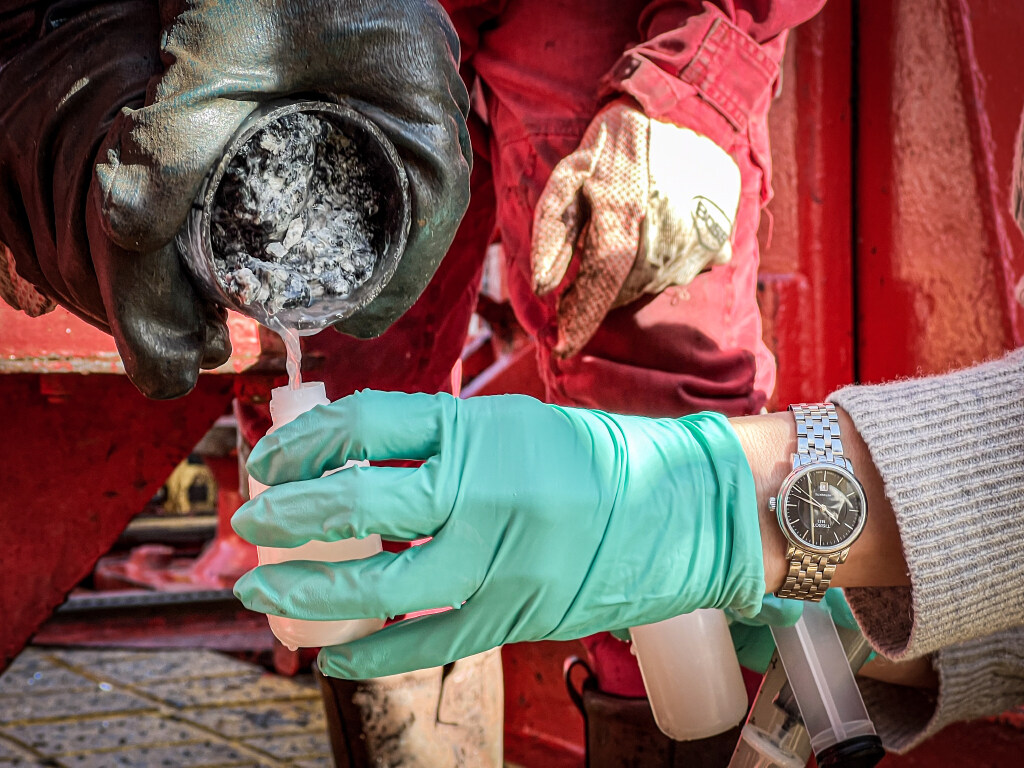
Retrieved cores contained sediment, microfossils, and a variety of rock types. Trapped between the grains, fractures, and plankton tests were fluids and compressed gases—exactly what the geochemists were after because they revealed critical information about the ocean floor and subsurface processes. On JOIDES Resolution, both inorganic and organic geochemists analyzed these components, each bringing specialized expertise to the expedition.
Inorganic geochemists focused on the chemical composition of interstitial (pore) waters and hard rock samples. Pore water was extracted from whole-round core sections using a combination of techniques, including a high-pressure hydraulic press capable of applying up to 40,000 pounds (~4,150 psi) to the samples. These fluids were then analyzed for a suite of nutrients and chemical constituents. Organic geochemists played a vital role in both scientific investigation and shipboard safety. Among their chemical analyses, they routinely monitored hydrocarbon gases by collecting small (~5 cm³) headspace samples from each sediment core.
This video features two expedition geochemists who focused on pore fluids- “messengers of the deep” – to understand where earthquakes originate.
In this spotlight, meet Alex Villa, Danielle Santiago Ramos and Oscar Cavazos-three Latino scientists who found not just professional success, but also an unexpected sense of belonging, on the night shift of IODP Expedition 393 aboard JOIDES Resolution.
SciOD Spotlight : Cultural Congruity, Chemistry, and Karaoke on the JR
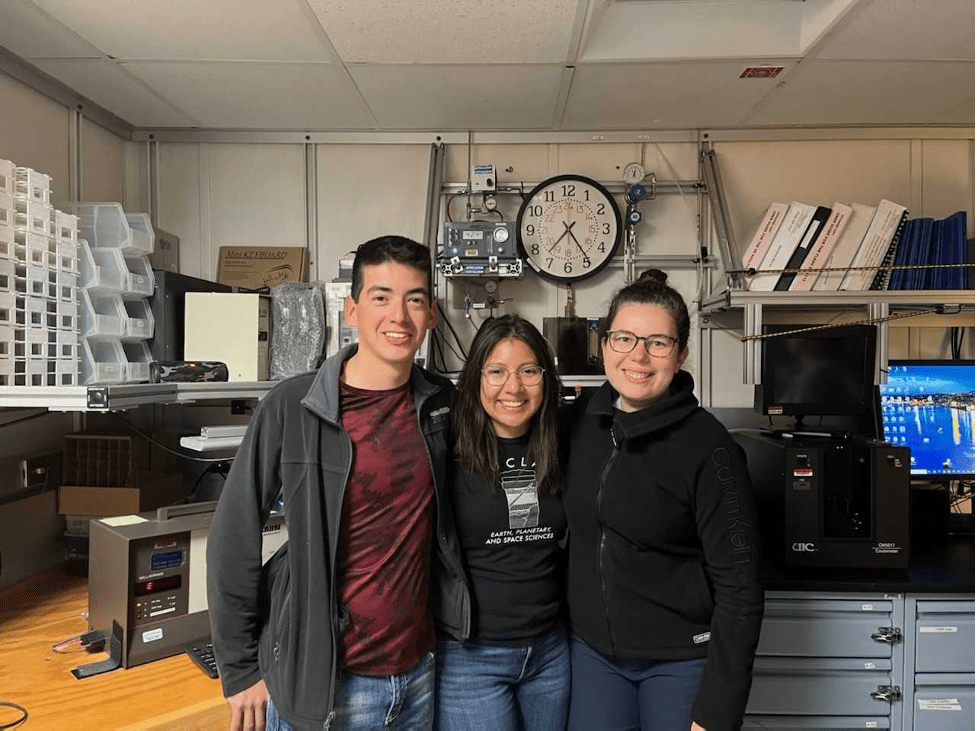
This SciOD Spotlight was adapted from “A Letter on Cultural Congruity from Latino Geochemists” a blog post written by Alex Villa, Danielle Santiago Ramos and Oscar Cavazos and released and posted on the joidesresolution.org blog by Tessa Peixoto, Outreach Officer on IODP Expedition 393.
——————————-
Through the International Ocean Discovery Program (IODP), scientists from 21 member countries collaborate to explore Earth’s deep-sea secrets. The diversity of people and expertise on board fosters scientific discovery—and in this case, something even more rare: a culturally affirming and joyful working environment for three early-career Latino geoscientists who are often underrepresented in American academic spaces. [1] [2] [3]
Unexpected Kinship on the Night Shift
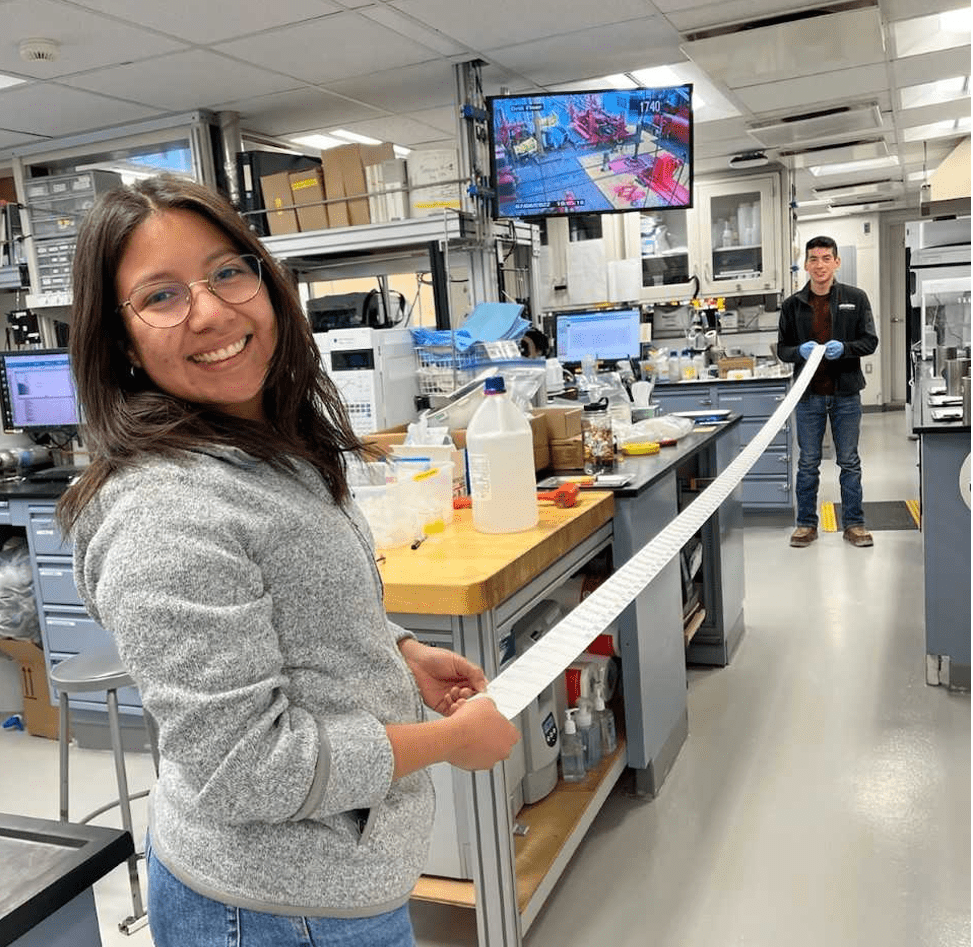
When Alex Villa, a doctoral student in geoscience at University of Wisconsin–Madison boarded the JR for her first expedition, she anticipated some nerves. As the youngest scientist in the geochemistry lab, she was conscious of how her intersecting identities might shape her experience, something all too familiar to scientists from historically marginalized communities. [4] But meeting her night shift teammates, Danielle Santiago Ramos and Oscar Cavazos, changed everything.
“I felt strangely calm and comfortable,” Alex reflected. “It took me a while to realize it was because we had similar backgrounds. Once we started to share on this and related experiences, I realized we were more alike than we thought.”
That kinship soon became a dynamic and effective collaboration—one marked by impromptu karaoke and syringe air-mic sessions to Beyoncé, Taylor Swift and Los Ángeles Azules between stretches of intense sediment coring and squeezing along with supportive scientific exchanges.
“I’m very grateful to have had such an amazing team,” Alex added. “We had open and honest communication and cared for each other’s learning. For Danielle, I hope to embrace the eagerness she had for sharing new ideas and her ability to share her expertise constructively. For Oscar, I hope to embrace the authenticity and confidence he brought when teaching and his ability to work hard while having fun.”
Family, Music, Science and Belonging
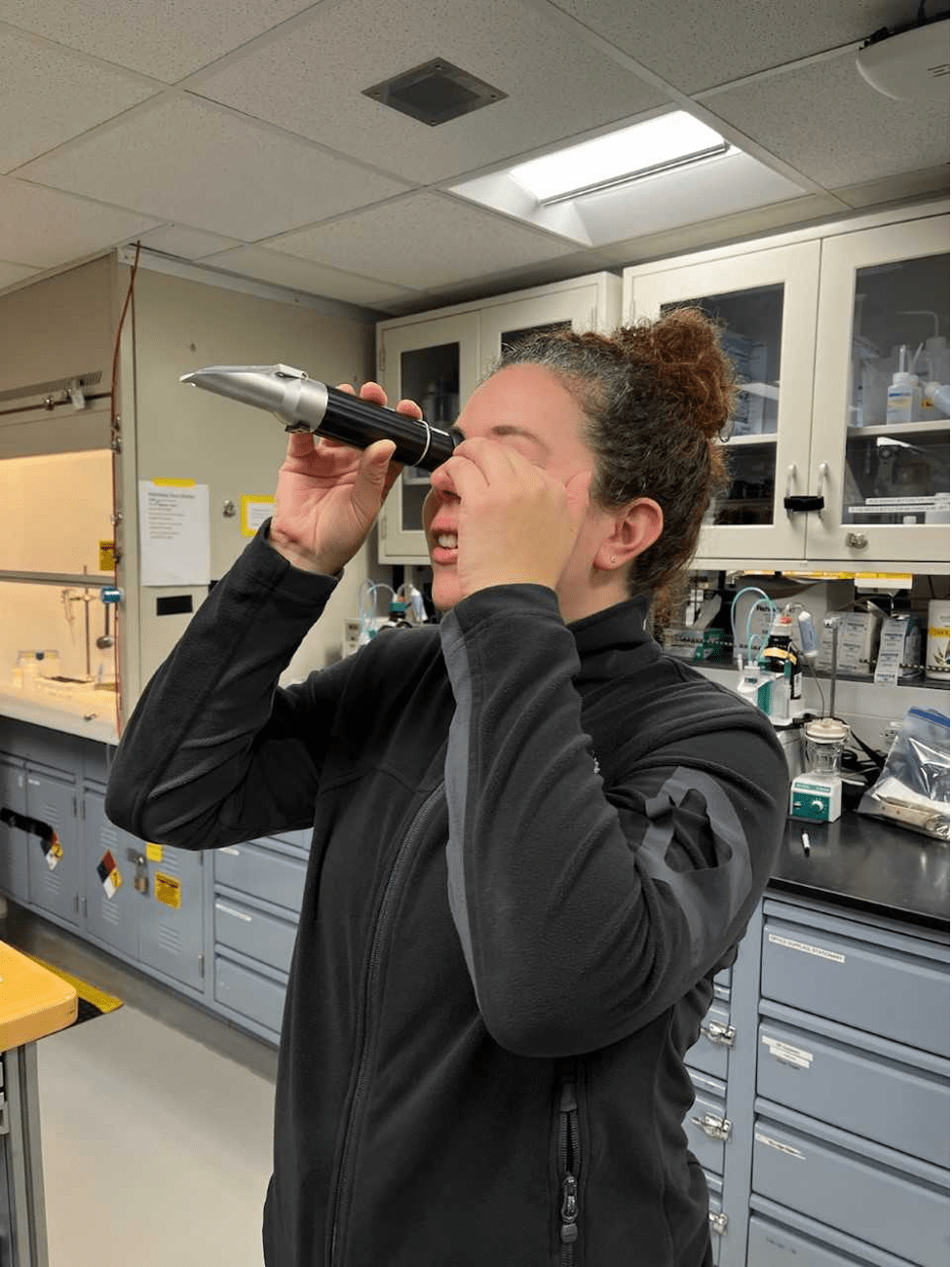
For Rutgers University Marine and Coastal Sciences professor Danielle Santiago Ramos, this was the first time she had ever worked in an all-Latino science team. “Although we come from geographically diverse backgrounds, our shared experiences became clear the more we talked about our childhood, family values, love of music, and life in academia.”
For her, being part of this night shift trio was a milestone that carried meaning far beyond the expedition. “It reminded me of how important it is to feel like you belong,” Danielle said. “We accomplished great science in the past two months and had so much fun doing it. I hope Alex and Oscar continue to take up space, lead with confidence, and stay true to themselves.”
Resilience and Recognition
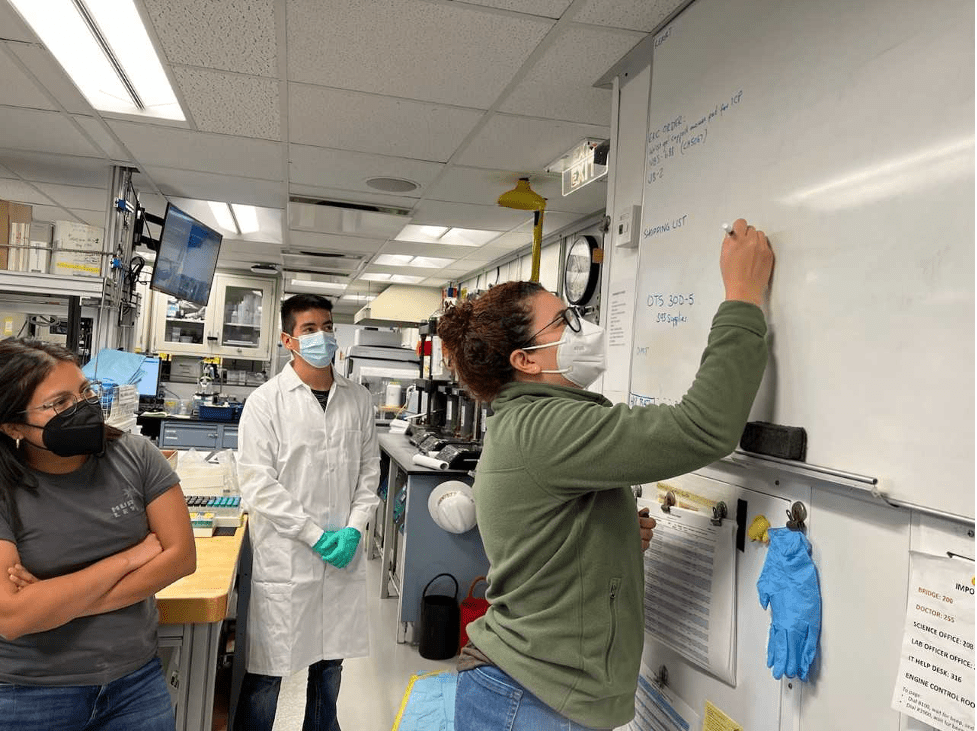
Oscar Cavazos, a Research Associate in the IODP Chemistry Lab, noted how rare and precious this team dynamic was.
“I felt a compatibility among us despite meeting for the first time. …When we first started talking about our experiences in our academic lives, I felt my own experiences connect with theirs and realized that I wasn’t alone. …Because of these initial conversations and connections, we developed great communication and working relationships to complete our jobs in the chemistry labs. I felt we were all honest with each other and were able to speak out when we felt we had something to share or needed guidance. Additionally, we are all early-career scientists and there was additional layer of connection in acknowledging that we can all learn from each other and not feeling like I potentially wasn’t going to be heard when offering my expertise.
I believe this experience between us was rare, and would be difficult to recreate in the geochemistry lab on the JR. We connected through our science interests, our experiences navigating higher education, and our backgrounds as low-income Latino’s pursuing success…”
He also recognized how faculty mentors had shaped each of their paths.
“I also realized that students like us don’t receive necessary guidance in navigating higher education and we all had unique experiences in that faculty members that recognized us and decided to mentor us.” Without such support, opportunities like this IODP expedition might not have been possible.
Even during hectic sediment-coring shifts, the lab felt comfortable, collaborative, and occasionally musical. “I will reminiscence about Danielle’s air-guitar solo, and Alex’s caring nature (she brought me snacks from the mess hall).
Meet the Scientists
Alex Villa
Ph.D. Candidate, Department of Geoscience, University of Wisconsin–Madison
Originally from Southern California, Alex grew up in a low-income, predominantly Black and Latino community with her two sisters and immigrant mom. She discovered geology midway through her undergraduate studies where she took an introductory oceanography class and was inspired by her professor to pursue research. She earned her B.S. in Geology from UCLA and her M.S. from UW–Madison. Her research focuses on paleoceanography and paleoclimatology, and she is a passionate advocate for equity in science education.
Danielle Santiago Ramos
Assistant Professor, Marine and Coastal Sciences, Rutgers University–New Brunswick
Danielle hails from Recife, Brazil, and came to the U.S. in 2009. A first-generation college student, she discovered Earth Science at Amherst College, where she attended on a full-ride scholarship. Ramos earned her Ph.D. at Princeton in 2019 and completed a postdoc at Woods Hole Oceanographic Institution in 2022. Her work bridges geochemistry and climate science.
Oscar Cavazos
Research Associate – Chemistry Lab Specialist, International Ocean Discovery Program
Oscar earned his B.S. in Coastal Environmental Science from Texas A&M University at Galveston in 2021. His undergraduate research ranged from paleo-hydroclimate reconstruction in the Northern Caribbean to FEMA flood zone communication in the Houston-Galveston Metropolitan area . Cavazos is especially grateful to Dr. van Hengstum, Dr. Dellapena and Dr. Retchless for the opportunity to develop his research interests.
Notes:
[1] From Cole and Espinoza 2008 “Examining the academic success of Latino students in science technology engineering and mathematics (STEM) majors”.
[2] From Beane et al. 2021 “Uneven increase in racial diversity of US geoscience undergraduates”.
[3] From 2010 to 2019, Black/African Americans, Hispanic/Latinx, and Native American/Alaska Natives receiving bachelor’s degrees increased from 9 to 16%, masters 7 to 10%, and doctorates 6 to 7% (Integrated Postsecondary Education Data System).
[4] 2/5th of geoscience programs fail to graduate more than one student from a marginalized group per year (bachelor’s degree).
In this Spotlight, organic geochemist Melissa Berke shares her appreciation of fellow collaborators and how she “found ways to keep the science fun!”
SciOD Spotlight : Science at Play