
8.6 Moving Forward with MSPs
With the conclusion of the International Ocean Discovery Program (IODP) and the use of JOIDES Resolution for scientific ocean drilling, the United States drilling activities and those of the European Consortium for Ocean Research Drilling (ECORD) are focusing on the utilization of mission-specific platforms (MSPs) to collect deep-sea cores. In 2025, a jointly-funded expedition with the International Ocean Drilling Programme (IODP3) and U.S. National Science Foundation (NSF) mobilized the drillship L/B Robert out of Bridgeport, Connecticut, to south of Massachusetts for coring and in situ sampling of sub-seafloor sediments and fluids on the continental shelf.
The following video shows drone footage of L/B Robert on site during Expedition 501.
This expedition set out with a group of international scientists to address the following research questions (see the Expedition 501 website for the full scientific proposal):
- How old is the freshened groundwater, and when was it emplaced?
- How much freshwater is there?
- How does the freshwater interact with seawater?
- What microbial communities are involved?
- What sources of carbon do microbes use?
- What is the general cycling of nutrients and energy in the shelf sediments?
- How might these freshwaters influence nutrient, carbon, and metal concentrations in seawater?
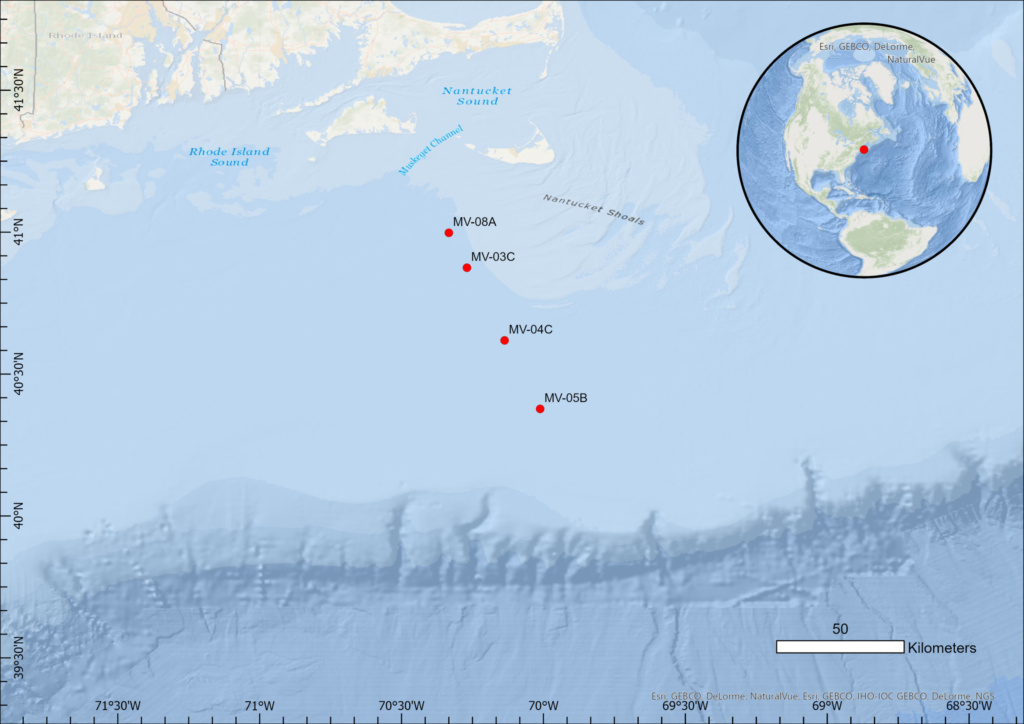
To sample and study the fresh or freshened water in offshore groundwater systems, sediment cores and water samples were collected to a maximum depth of 1,800 feet (550 meters) below the ocean floor at the locations shown on this map.
The Expedition 501 blog contains entries before and during the expedition, including profiles of the scientists on board L/B Robert. You are encouraged to continue to visit the blog and expedition website and media, reports, and results continue to be posted.
SciOD Spotlight – Scientists on a mission-specific platform
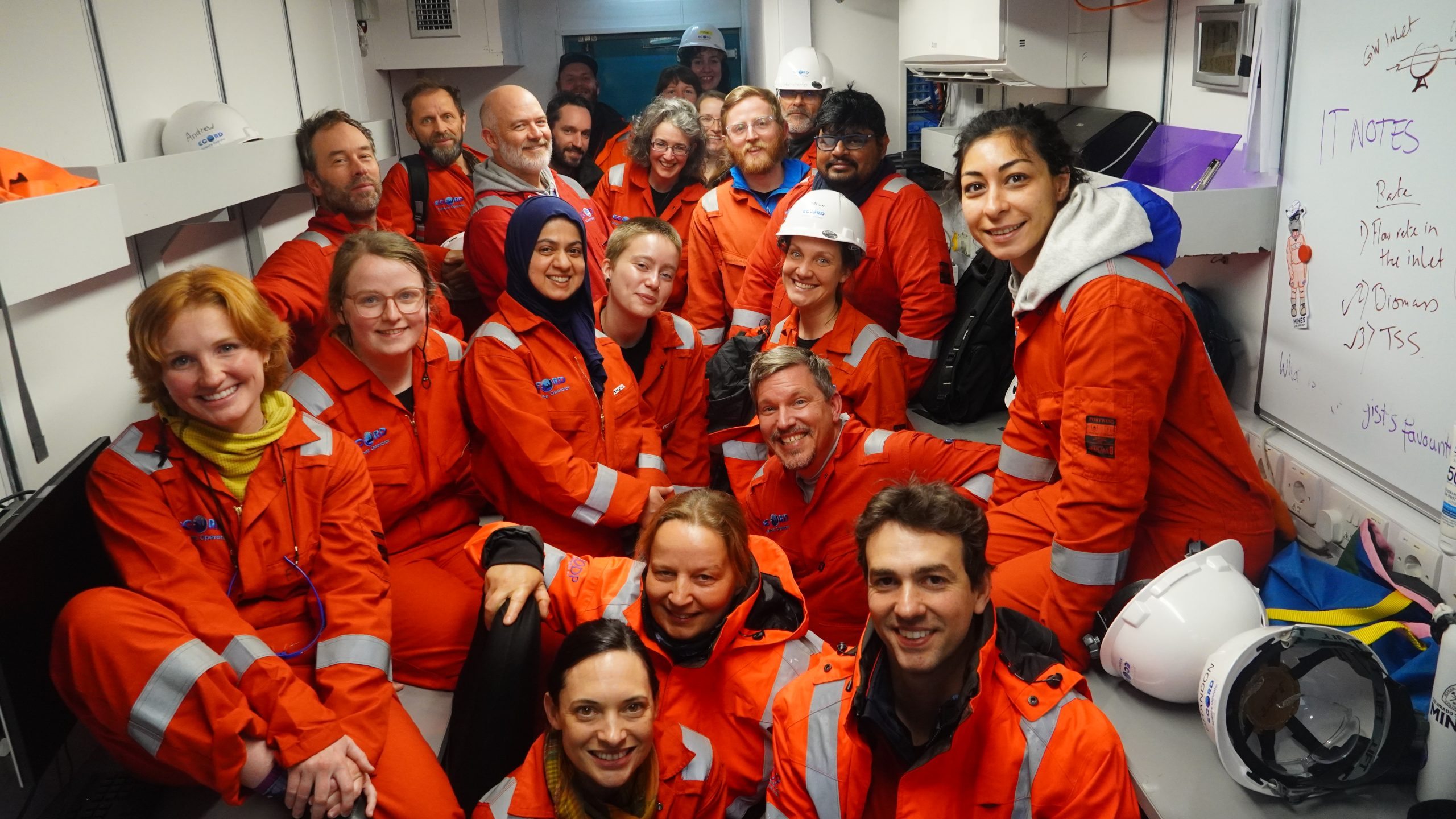
There were 41 science team members from 13 nations (Australia, China, France, Germany, India, Italy, Japan, Netherlands, Portugal, Sweden, Switzerland, United Kingdom, USA) that took part in the expedition that consisted of two phases: offshore on L/B Robert, and onshore operations at the Bremen Core Repository in Germany. Take a moment to read about the backgrounds and research questions being addressed by two scientists, Avishek Dutta (geomicrobiologist) and Ellie Miller (paleoglaciology and isotope geochemistry).
Questions to consider:
- Which of the research questions, listed above on this page, is Avishek Dutta working towards addressing? Which questions are Ellie Miller contributing data towards?
- How do you think the professional training for both scientists has been similar? Where do you think their training has been different?
To explore why and how the research of Expedition 501 matters to not just science but society, click on the embedded post below for an animation prepared by EPC Leicester.