
8.5 Geohazard Assessments in Japan’s Subduction Zones
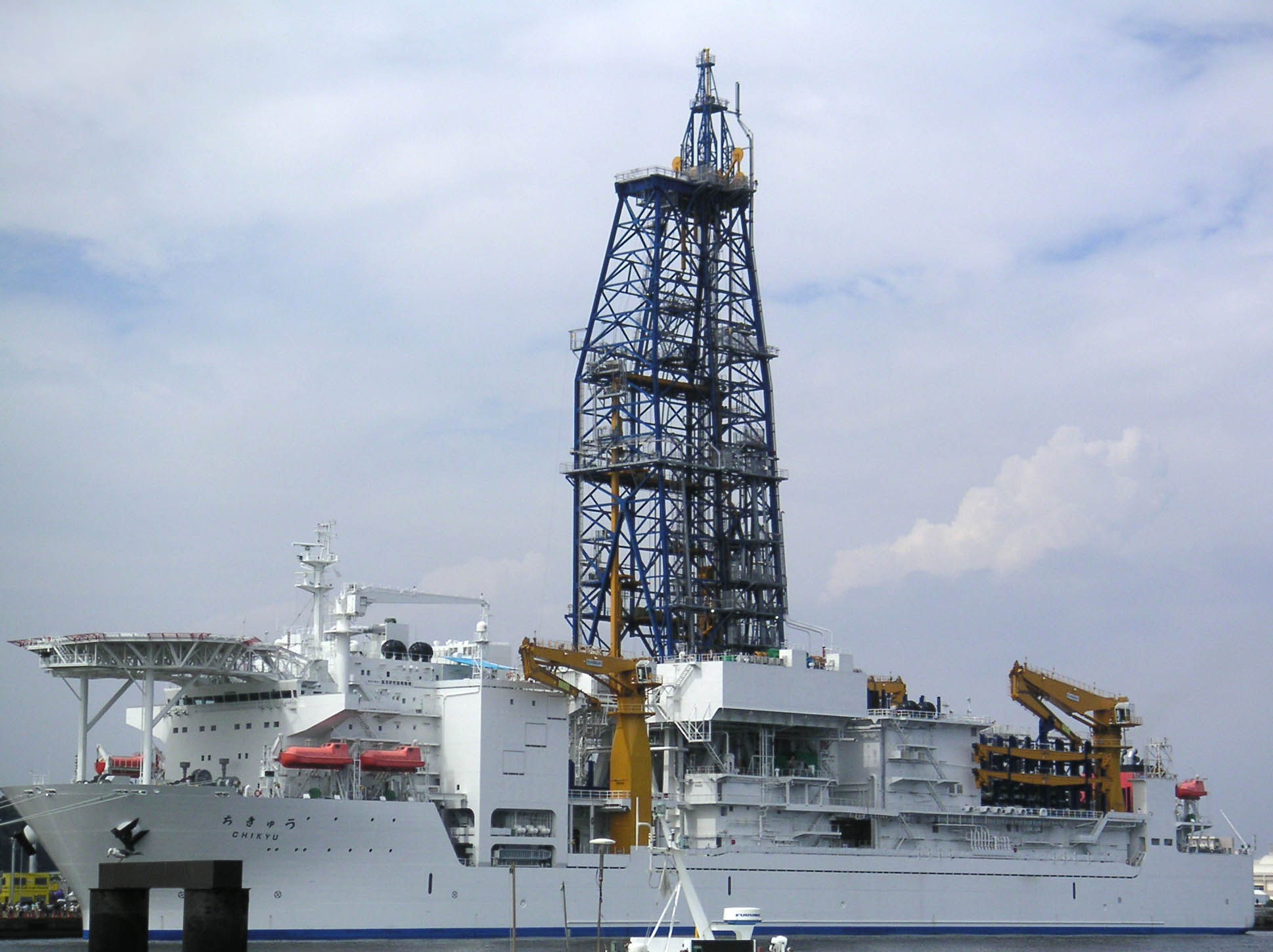
IODP Expedition 405 on Chikyū was the final expedition in the International Ocean Discovery Program. However, this expedition should be remembered for its scientific contributions that will address fundamental questions about earthquake slip on subduction zones that may directly inform earthquake and tsunami hazard assessments around the world.
“On March 11, 2011, a devastating 9.0M earthquake was generated off the east coast of Japan, resulting in tsunami waves up to 40 meters high. It has been estimated that over 19,000 people died during this disaster. The source of this unparalleled event was the Japan Trench, a subduction zone to the east of the island of Japan.
“Subduction zones are known to be the source of Earth’s largest earthquakes, due to the great stresses that develop as the subducting plate is pulled beneath the overriding plate. When a significant area of the seafloor is displaced during a massive earthquake, this disruption to the water column can generate a tsunami, resulting in even greater devastation as the coastline is inundated.
“On September 6, 2024, Expedition 405: Tracking Tsunamigenic Slip Across the Japan Trench (JTRACK) began aboard the drilling vessel Chikyū. The primary objective of this expedition is to investigate the shallow slip across the Japan Trench that led to the unprecedented 2011 Tohoku-oki earthquake.” — from joidesresolution.org blog
This video captures an overview of the scientific objectives of IODP Expedition 405. To see additional videos about the expedition, check out the expedition YouTube playlist.
For additional detail about the work completed before IODP Expedition 405 and how the expedition began, read the following article from the November 2024 issue of The Drilling Dispatch (full issue online).
To learn more about what happened during the expedition through a different mode of science communication, IODP Expedition 405 Onboard Outreach Officer Nur Schuba authored and illustrated a comic to share not only the science but life at sea on Chikyū.
SciOD Spotlight – Nur Schuba (geoscientist/illustrator)
Dr. Nur Schuba is a Research Assistant Professor with the Bureau of Economic Geology at The University of Texas at Austin (USA). She also has a Masters of Fine Arts in Visual Communication and has an entire online portfolio of her illustrations. She joined Chikyū for Expedition 405 in the role of an Onboard Outreach Officer. Tapping into her background geoscience knowledge and artistic skills, she utilized both to generate a comic that details real-time research, shipboard operations, and daily life through illustrated stories.
To access the online comic directly, visit the online flipbook.
Exercise: Communicating About IODP Expedition 405
On this page we have shared three different types of communications describing IODP Expedition 405 – a YouTube video, a newsletter article, and an illustrated comic. Consider these different formats as you answer the following questions:
a) Who do you think the intended audiences are for each of these communications?
b) Do you feel that one mode of communication is more effective than the others for sharing scientific results? Explain.
c) What information do you feel is missing from these pieces that would help you as a student and non-professional in the scientific ocean drilling field better understand the objectives of EXP 405?
d) What are other tools and approaches that could be used to communicate about EXP 405? What other audiences could be reached?