Chapter 6 Objectives
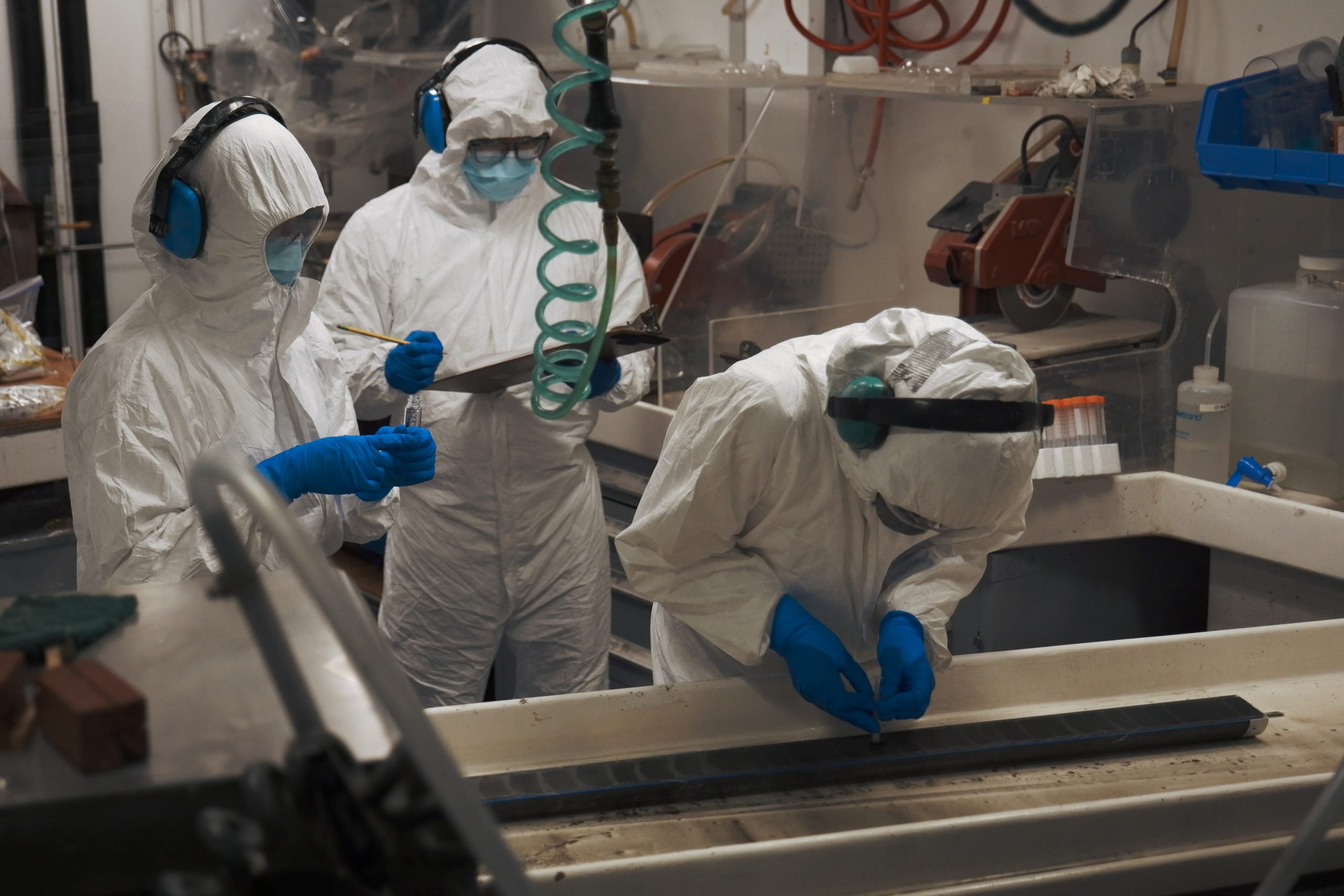
Once cores arrived on deck, they entered a carefully designed “core flow” process, moving step by step through the shipboard laboratories where scientists measured, sampled, and recorded every detail. Meanwhile, specialized tools continued collecting data from deep within the borehole itself. This chapter will take you along the cores’ path, introduce you to the labs and the scientists who worked in them, and show how all of this information came together to build a working model of the study site.
Learning Objectives for Chapter 6: Shipboard Laboratories
After reviewing the content in this chapter and completing the exercises, students will be able to:
- Understand the process for sample flow once core was on deck
- Describe the goals and methods of each lab
- Describe how different datasets were used to create a holistic view of the seafloor (including the age model)
- Contrast differences between onshore laboratory equipment/techniques versus shipboard techniques for studying cores