
8.2 DSDP Leg 1 – a Science and Engineering Success from the Start
The purpose of the Deep Sea Drilling Program (DSDP) was scientific exploration through the collection of seafloor core samples from around the world. What started as scientific ideas in 1966 (Phase I of DSDP) led to the building and launch of the drilling vessel Glomar Challenger in 1968 (*note that Glomar Challenger was named in honor of H.M.S. Challenger). In her EOS piece, An Ambitious Vision for the Future of Scientific Ocean Drilling, Dr. Paula Bontempi noted that these cores collected by Glomar Challenger helped researchers in their early studies of seafloor compositions and ages, exploration for natural resources, and otherwise inform a variety of questions about Earth’s deep-ocean environments.
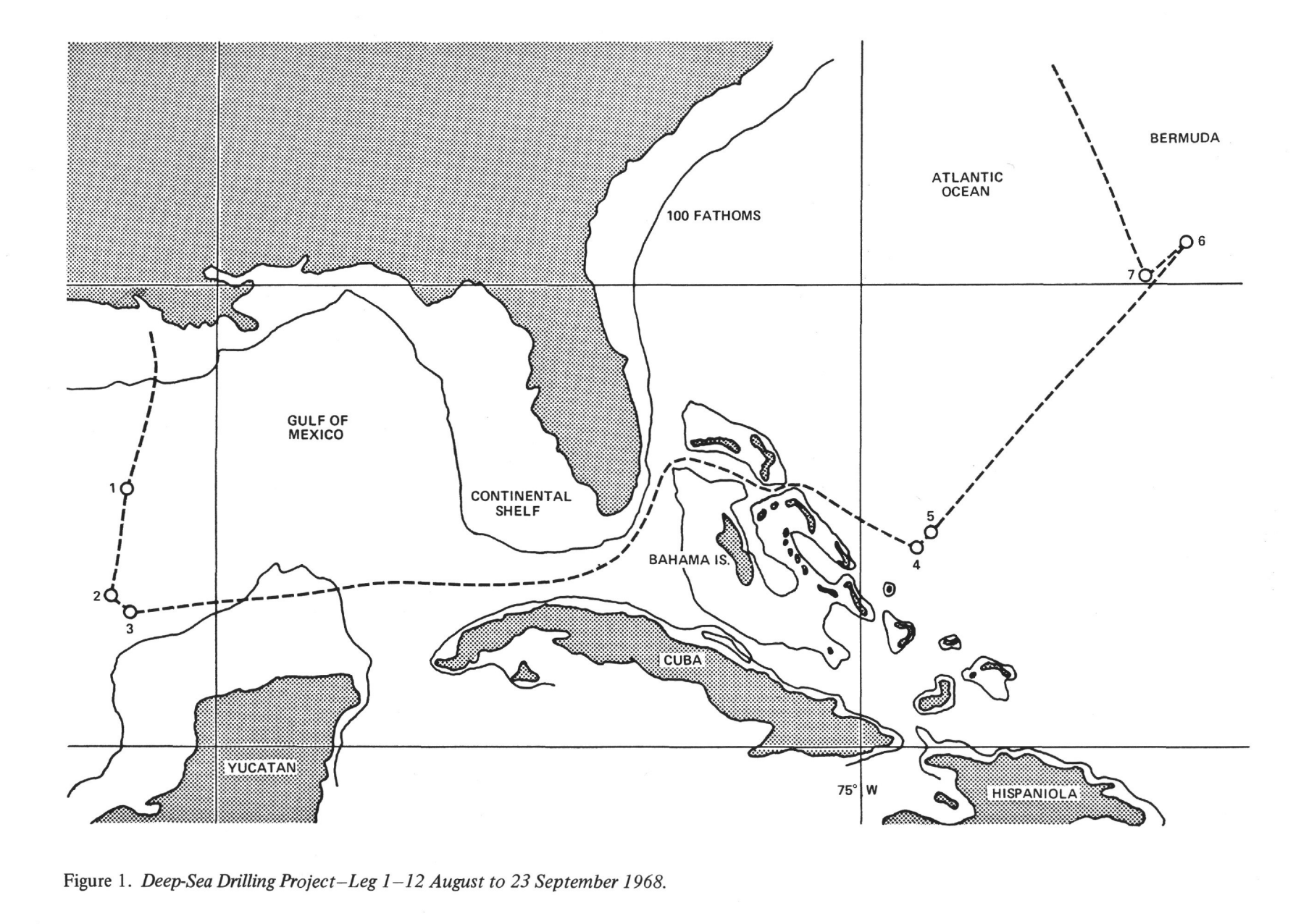
The success of the Glomar Challenger was evident from its first expedition, sailing from Orange, Texas, to New York, August 11 to September 23, 1968. These successes not only included advancing our scientific knowledge of the deep sea but also advancements in engineering technology.
As reported… highlights of Leg 1, from the Introduction of the Leg 1 Initial Reports
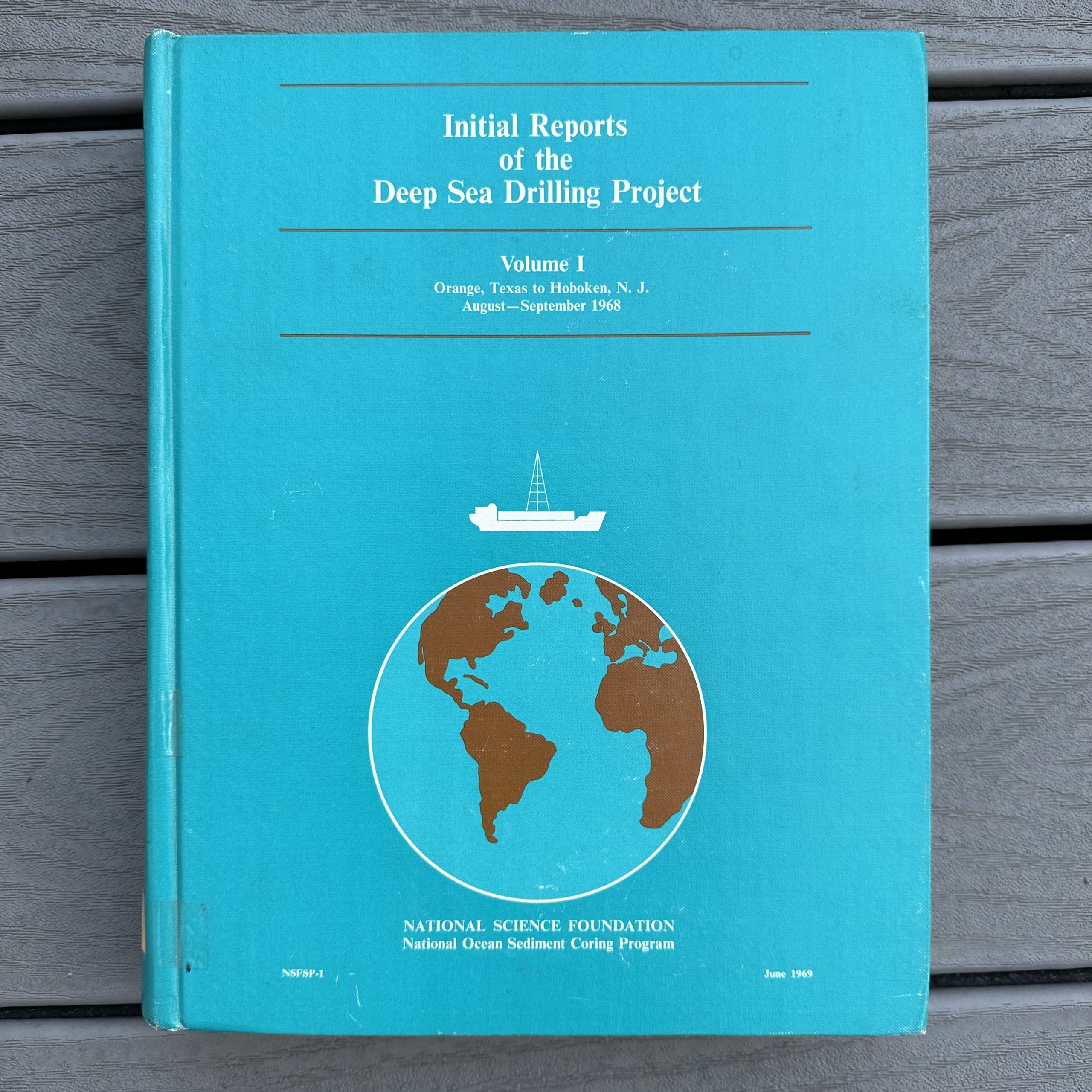
From the first paragraph of the Introduction to the Initial Reports of the Deep Sea Drilling Project – Volume 1:
As a result of the pioneering character of this work, many new records for drilling in deep water from a dynamically positioned vessel were established. These include: drilling in a water depth of 5354 meters (17;567 feet), use of a drill pipe length of 5650 meters (18,523 feet), and penetration beneath the sea floor of 770 meters (2528 feet). Scientific achievements of Leg 1 include the recovery of the oldest rocks (uppermost Jurassic) yet found in the deep ocean, discovery of petroleum and typical salt dome cap rock in the deep ocean, and demonstration of the important role of turbidites and radiolarian chert and hard limestone strata in deep-sea sedimentary deposits.
A more comprehensive online a report provides the scientific highlights of each 55-day leg of DSDP from Leg 1 through Leg 18, courtesy of UCSD Library archives. In addition to the scientific and engineering achievements, Co-Chief Scientist of Leg 1 Dr. Maurice Ewing was quoted:
At the conclusion of Leg 1, Dr. Ewing termed DSDP, “a new era in the science of geology”.
“The science of geology up to now has been built mostly on observations that can be made on continents, but the Glomar Challenger makes it possible to drill in three miles of water and to recover core samples several thousand feet down,” Dr. Ewing said at a press conference in New York City.
One wonders what it was like to be a scientist on board Glomar Challenger for its first sailing, being a part of these significant, historical accomplishments during a time of a new direction for deep-sea research. Fortunately, some of those thoughts were captured in a reflection authored by one of the paleontologists on board, Dr. J. Dave Burkey. Read about his arrival to the ship at midnight, and how “my midnight arrival felt less like boarding a research vessel and more like stepping into another world.”
SciOD Spotlight – Memories from the first leg of scientific ocean drilling
In the magazine Oceanography, a published article authored by J. Dave Burky sharing his experience sailing on the very first Glomar Challenger expedition, Leg 1.
Citation: Bukry, J.D. 2006. Memories of Deep Sea Drilling Project Leg 1. Oceanography 19(4):161, https://doi.org/10.5670/oceanog.2006.24.