
6.3 Micropaleontology
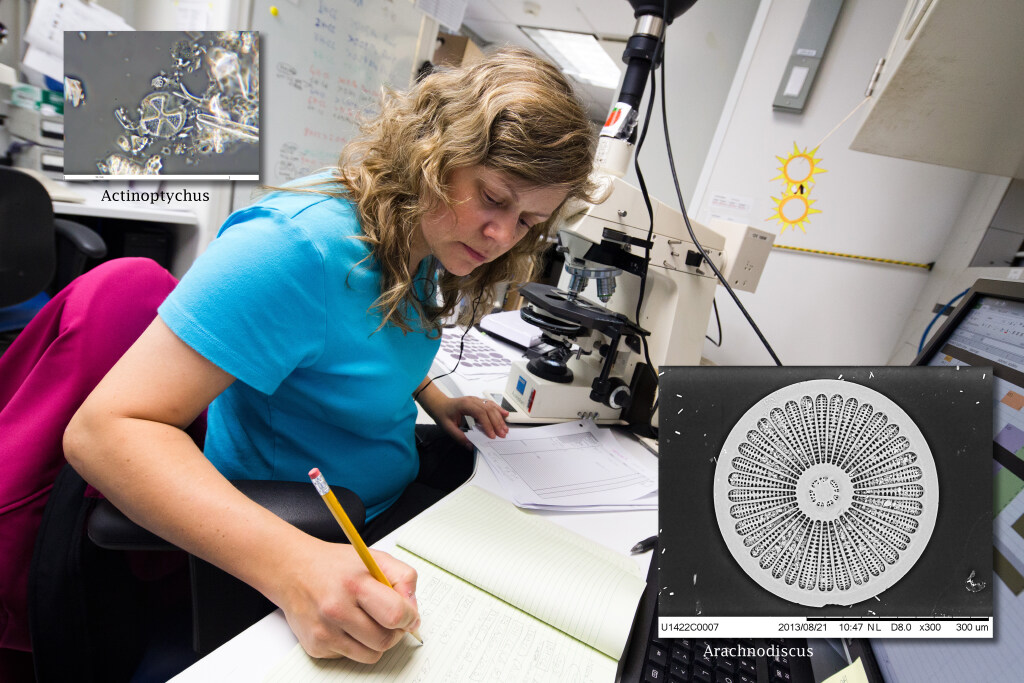
sleuths of ancient life
The main task of shipboard paleontologists was to identify and determine the age of sediments using microfossils, the tiny remains of once-living organisms preserved in seafloor cores. This method, called biostratigraphy, is based on a vast fossil database that records when species first appeared and when they went extinct in different regions of the ocean. By comparing fossil assemblages in a core to this database and collaborating with paleomagnetists, the expedition paleontologists could build a timeline for the cores.
Microfossils also reveal past environmental conditions. Because different species prefer different water depths, temperatures, and salinities, their presence provides clues about the paleoenvironment. With this information, scientists could reconstruct rates and processes of deposition, correlate sediment layers from site to site, and place local changes into the context of global climate and ocean events whose ages are already known.
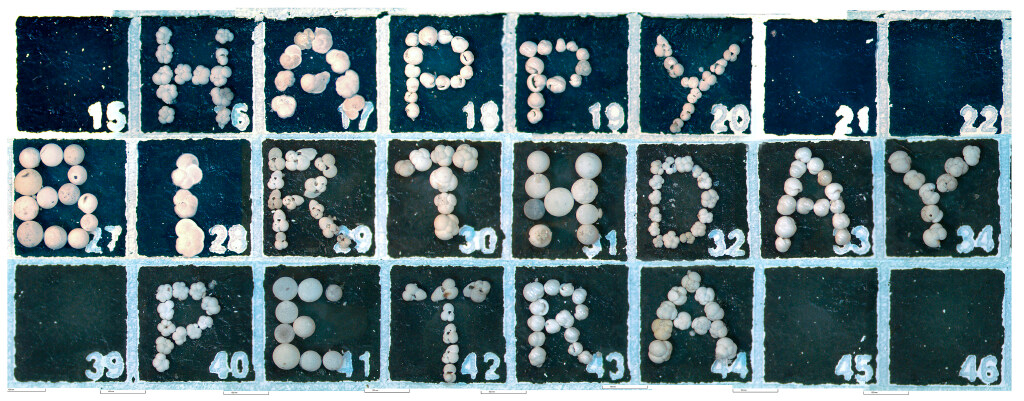
Meet the team…of microfossils!
Several major groups of microfossils were especially important.
- Foraminifera (forams): Single-celled animals with carbonate shells. They may live near the sea surface (planktonic) or on the seafloor (benthic). Many are large enough to see with the naked eye.
- Radiolarians: Single-celled animals with delicate silica skeletons that float near the sea surface. They are especially common in areas of high productivity, such as the equatorial Pacific or the Southern Ocean.
- Calcareous nannofossils: Tiny carbonate plates and skeletal elements from phytoplankton that live near the surface ocean. They often occur in enormous numbers and can dominate some rocks—like the famous white chalk cliffs of England.
- Diatoms: Photosynthetic algae with silica skeletons. They thrive in nutrient-rich waters and preserve well in sediments.
- Palynomorphs: Microscopic fragments of mega-organisms made of acid-resistant organic material. Examples are pollen, spores, woody fragments, and leaves.
When the paleontologists’ fossil age data was matched to the paleomagnetists’ measured record of magnetic polarity reversals, an age model was compiled. This model provided the essential link between ages, depths and datasets across drill sites. From this model, scientists could reconstruct past ocean conditions and provide critical insights into Earth’s geologic and climate history.
In this spotlight, micropaleontologist Chris Lowery talks about his exciting investigations on one of IODP’s mission-specific platforms.
SciOD Spotlight – Chris Lowery, micropaleontologist
Micropaleontologist Chris Lowery joined the Chicxulub Impact Crater drilling expedition, one of the most famous projects in Earth science. The team set out to help solve the mystery of how an asteroid wiped out the dinosaurs and reshaped life on Earth. Here are a few takeaways from Chris’s conversation:
- Tiny Fossils Speak Volumes! While dinosaurs capture public imagination, microfossils tell the extinction story in detail.
- Mission-Specific Platforms (MSPs) operate where the JR cannot and are an essential alternative for hard-to-access study sites.
Exercise: Micropaleontology Near the South Pole
This video introduces the paleontology team from IODP Expedition 374. Conducted in early 2018, this expedition studied sediments from the Ross Sea, near the West Antarctic Ice Sheet (WAIS). The scientists’ main goal was to understand how the WAIS has responded to past changes in climate and ocean conditions. Watch the video and then answer the questions below:
a) Why does the micropaleontology team describe themselves as he “keepers of time”?
b) What are the two types of foraminifera studied, and what unique information does each provide?
c) How can the microfossil evidence help support the broader scientific objectives of Expedition 374?