7.2 The People Behind the Core
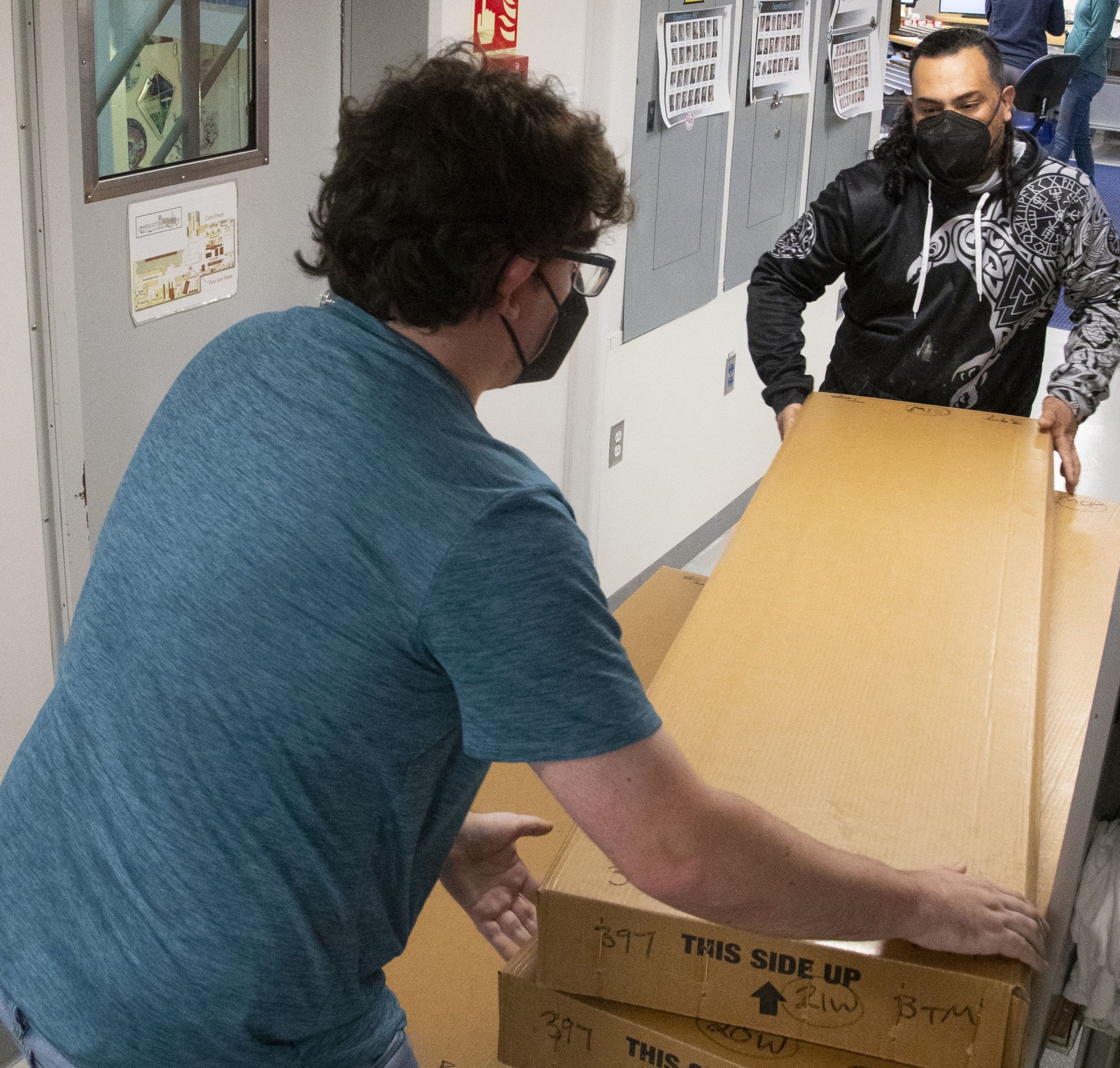
At any given core repository, more than 100 kilometers (62 miles) of core are stored. This leads to two key features.
First, across the three major repositories—the Gulf Coast Repository (GCR) in Texas, USA, the Bremen Core Repository (BCR) in Bremen, Germany, and the Kochi Core Center (KCC) In Kochi, Japan—there has been, and continues to be, a strong commitment to procedural standardization. This consistency improves the efficiency of core processing and ensures accessibility, even as different phases of scientific ocean drilling come and go.
Second, maintaining these collections requires a substantial workforce. Because procedures are standardized across institutions, daily operations and staff responsibilities are also quite similar from one repository to another. Thanks to these dedicated repository teams, the cores remain an active scientific resource long after expeditions have ended.
What Do They do?
Across the three repositories, the staff are focused on a several different tasks. Their big-picture focus is split between ensuring the care of the cores, maintaining effective laboratory operations, updating curation databases, and completing sample requests. Sample requests are where interested parties looking to study cores or part of a core for a specific research question send in a request to use cores from the repository (the individuals do not have to be related to the expedition that took the core of interest). For example, the KCC receives around 200 samples requests a year.
Additionally, during the time of scientific ocean drilling programs like International Ocean Discovery Program (2013-2024), the curatorial staff had to stay up to date and be prepared to receive the cores from concluded expeditions. This responsibility remains central to the repository’s daily work, especially as expedition initiatives spearheaded by mission-specific platforms by ECORD (European Consortium for Ocean Research Drilling) and IODP3 continue.
Gulf Coast Repository
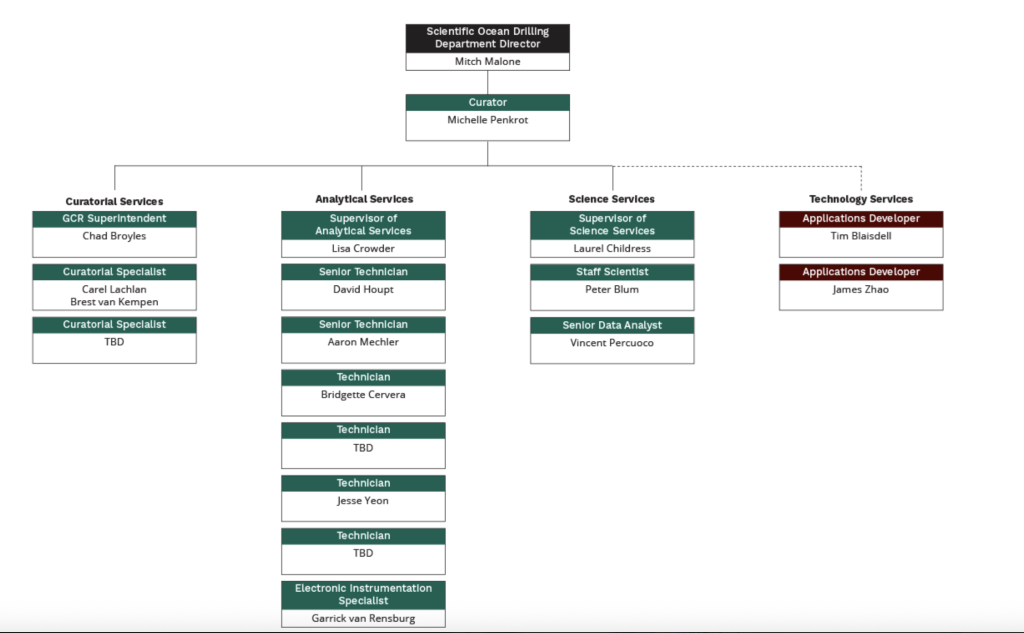
The above diagram is a visual of GCR’s staffing at the height of of International Ocean Discovery Program (IODP). After 2024, and with the defunding of JOIDES Resolution (JR), the workforce has shifted.
The GCR was in a unique position, in comparison to the other repositories, as it was in the same building as the headquarters for the International Ocean Discovery Program. The technicians had opportunities to sail on JR, as well as, work at the GCR when they were onshore. Technicians played a key role in acting as lead experts on curatorial techniques and instrument analyses, onshore and offshore. At the beginning of each expedition, and during sampling parties, they would be tasked with training the science crew on what were laboratory protocols, how to use the laboratory instruments, and how to handle cores.
For JR expeditions, the repository core curator participated in pre-cruise meetings to discuss high-level curation techniques and to identify potential overlaps in the research goals of the sailing scientists. The shipboard curator then served as the on-board curatorial representative, responsible for strategically meeting the curation needs of the entire science party based on those pre-cruise discussions.
One key decision made for JR expeditions concerned the timing of personal sampling for sailing scientists. Typically, this depended on the expected core recovery. When recovery was high, sampling was most often deferred to a post-expedition sampling party. When recovery was lower, personal sampling usually occurred during the cruise.
Exercise : James Kowalski, Shipboard Curator
Check out the audio interview with James Kowalski and answer the below questions:
a) As a shipboard curator, who does James work closely with, and for what reasons?
b) What skills are essential for someone working as a curatorial technician or shipboard curator?
c) What key steps or experiences led James to become a curatorial technician serving as a shipboard curator?
The GCR, post 2024, is now working with scientists who have done expeditions on MSPs (where the scientists did not have laboratory analyses available to them), and working with scientists who have sample requests for cores that are held at the GCR.
Bremen Core Repository
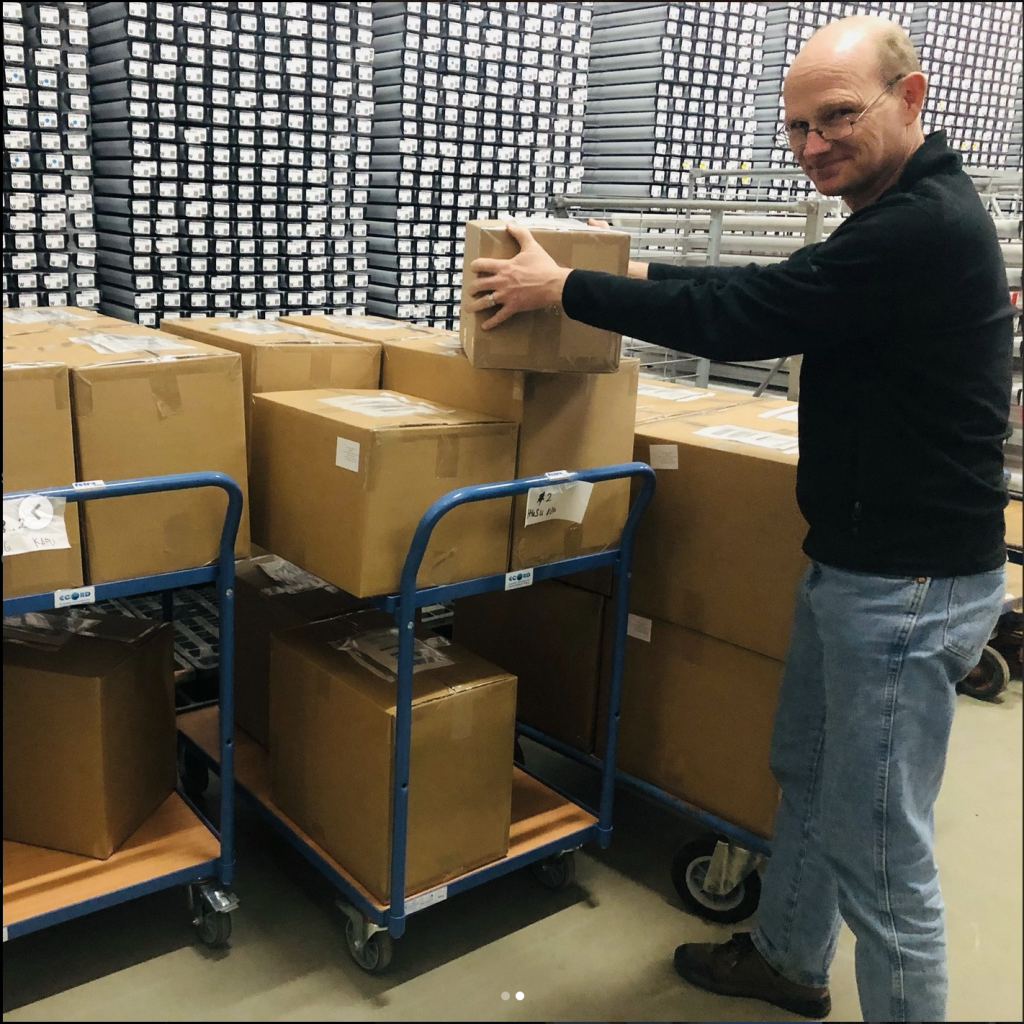
The Bremen Core Collection at MARUM has day-to-day operations that range from focusing on completing approved sample requests to maintaining lab operations to hosting outreach events for the university or the public. Similar to the other core repositories, the BCR has laboratories that allow for scientists to conduct sample analyses in house. This function allowed for the team to host sampling parties for scientific ocean drilling expeditions, where 20 to 50 scientists would visit the BCR and spend multiple days sampling and analyzing material.
Sample Party for IODP Expedition 401
Listening check: How many samples did they take for Expedition 401 sampling party?
Now the team hosts onshore operation events where teams from Mission Specific Platform expeditions visit the BCR to complete the analyses that could not be done when offshore.
Watch This Video
Check out this post to see what it looks like to inventory samples at the BCR!
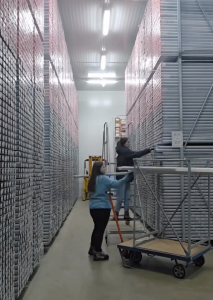
Their staff oversees work in the BCR, the GeoB Core Collection. The team is composed of:
- Head of Bremen Core Repository
- GeoB curator
- Data Management BCR
- ESO Assistant Curation & Lab Manager
- BCR superintendent
- Curation of interstitial water (IW) samples,
- Petrophysics technician for core logging and core scanning methods
- Curatorial Specialist
- Logistics & Procurement Expert, BCR
The BCR also works alongside European Consortium for Ocean Research Drilling (ECORD), to manage the curation of cores collected during ECORD expeditions. The head of the BCR and core curators would be in charge of handling any curation questions, and core goals for such expeditions.
SciOD Spotlight: Meet Chang Liu

Hello, my name is Chang Liu, and I recently joined MARUM – University of Bremen as a geochemist in the Bremen Core Repository team. I hold a PhD in marine geology, with a research focus on paleoenvironmental reconstruction and sediment provenance using deep-sea drilling cores.
At MARUM, my research makes use of cores and their derived datasets from both offshore expeditions and onshore analyses. A particular focus of mine is to quantify how much CO₂ can be sequestered through silicate weathering processes, which strongly depend on the intensity and rate of weathering in sediments from different provenances (e.g., juvenile magmatic versus cratonic sources). I am also interested in bridging geochemical proxies between core-scanner data and discrete sample measurements, such as linking XRF scanning with ICP-OES results.
Beyond research, I am involved in organizing offshore expeditions and onshore sampling parties, with a particular focus on geochemistry. My responsibilities range from setting up geochemical instruments for drilling platforms to ensuring QA/QC of
collected data.
Before joining MARUM, I worked at the International Ocean Discovery Program (IODP-JRSO) aboard the research vessel JOIDES Resolution and participated in ten internationally coordinated sea-going expeditions. I look forward to bringing this experience to the newly formed scientific drilling community organized by ECORD and continuing to contribute to international collaborative science.
Kochi Core Center (KCC)
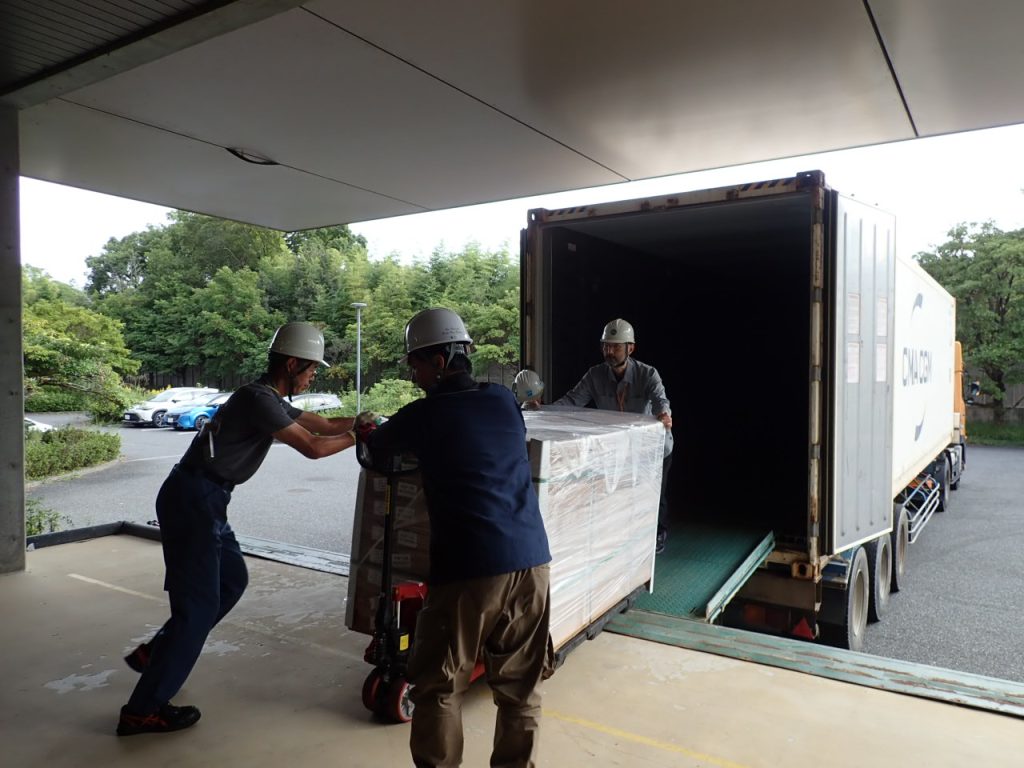
“The Institute consists of three research groups, a science support group and a general affairs division, and is mainly doing physical, chemical and microbiological analyses and research using core samples, and storage and curation of core samples.” (KCC Website)
The KCC core curator, similar to the other repository core curators, reviews the sample requests and then passes it on to the technical staff to follow through on the approved request. From isolating the cores to shipping the samples, the entire process can take up to 4 days to complete. Nevertheless, it is a critical step in making ocean floor samples available to move international ocean science research forward.
The KCC curation workforce of 19 team members
- Core curator
- Shipboard curators
- Repository supervisor
- Technical staff for sampling
- Logistics specialist
- IT specialist
- Laboratory manager
- Laboratory technicians
and more!
What cores does the KCC like to show off to visitors?