
Chapter 7: Physiological Measures of Emotion
Autonomic Nervous System: Parasympathetic Nervous System (PNS) and Sympathetic Nervous System (SNS)
The nervous system is divided into two parts: 1) the central nervous system (CNS) and the peripheral nervous system. The CNS includes the brain and spinal cord, whereas the peripheral nervous system includes parts of the nervous system outside of the brain and spinal cord. The autonomic nervous system is part of the peripheral nervous system and includes the sympathetic nervous system (SNS) and the parasympathetic nervous system (PNS). The autonomic nervous system controls the functions of internal organs including the stomach, heart, bladder, intestines, blood vessels, and sweat glands.
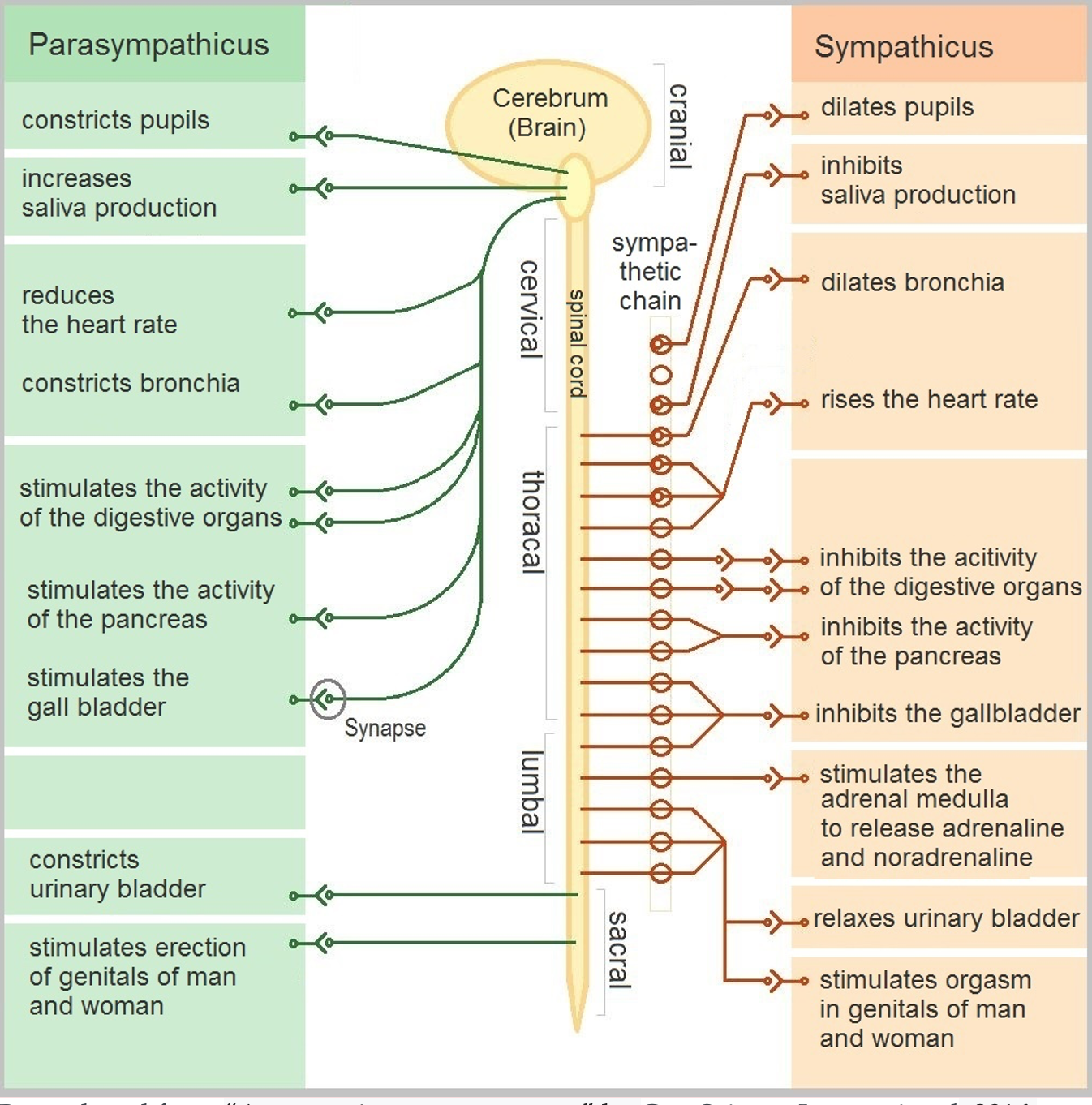
The SNS prepares the body for physical action, including fighting, fleeing, freezing, and engaging in sexual intercourse (typically called the 4 F’s). When the SNS is activated, the body’s resources are taken away from processes such as digestion and resting and sent to organs that activate physical activity such as the heart and the pupils. The PNS system is activated when people are at rest, such as after eating or when relaxing. The PNS system slows down organ function, such as slowing down our heartbeat. Figure 1 displays the functions that occur when the SNS or PNS system is activated.
Figure 1
Processes of the SNS and PNS Systems
Long Description
The image is a diagram comparing the parasympathetic and sympathetic divisions of the autonomic nervous system, highlighting their functions. On the left, the parasympathetic functions are listed with a green background. Green lines connect to various functions, including constricting pupils, increasing saliva production, reducing heart rate, constricting bronchi, stimulating digestive organs, pancreas, and gallbladder activity, constricting the urinary bladder, and stimulating erection in both genders. The central section features the cerebrum and the spinal cord, with the terms “cervical,” “thoracal,” “lumbar,” and “sacral” adjacent to different nerve paths. On the right, with an orange background, the sympathetic functions are shown, including dilating pupils and bronchi, inhibiting saliva production, increasing heart rate, and activities related to digestion, adrenal medulla, gallbladder, urinary relaxation, and orgasm stimulation. These functions are associated with the sympathetic chain along the spinal cord.
Reproduced from “Autonomic nervous system” by Geo-Science International, 2016. Open Access, Creative Commons CC0 1.0 Universal Public Domain Dedication. Retrieved from: File:The Autonomic Nervous System.jpg – Wikimedia Commons
The SNS and PNS can work simultaneously or separately – sometimes they are activated at the same time, sometimes at different times. So, because they could be active at the same time, this makes it very hard to tweeze apart which system is working during an emotional experience. For instance, someone’s heart rate could increase because 1) they are scared and the SNS is activated or 2) the PNS became less active or 3) both systems are working at the same time! Further, sometimes these systems only change certain organs at the same time. For example, having a normal heart rate (PNS), but sweating (SNS).